Dust-Free, Durable, Done Right: Your Floor Sanding Playbook
If you’ve ever hired trades before, you already know the truth most adverts tiptoe around: a floor sanding job can be glorious—or ghastly. The difference lies not in the machines (anyone can rent them) but in the judgement, care, and sequence of decisions made by the team you bring into your home or business. So before you Book a Sanding Team (yes, click that when you’re ready), ask the right questions. Because, as Drayton Bird might say, those who ask better questions spend less, wait less, and end up smiling more.
To make this practical from the start, here are some useful services you may want to reference as you read:
- Wood Floor Sand & Seal – the classic refresh.
- Wooden Floor Sanding & Polishing – the full beauty treatment.
- Dust-Free Floor Sanding – because your lungs and curtains matter.
- Wooden Floor Finishing and Floor Finishes & Seals – the final coat that makes or breaks the result.
- Wood Floor Repairs & Renovation and Repair – when damage or age has had its way.
- Gap Filling with Strips or Resin – for draughts, rattles and squeaks.
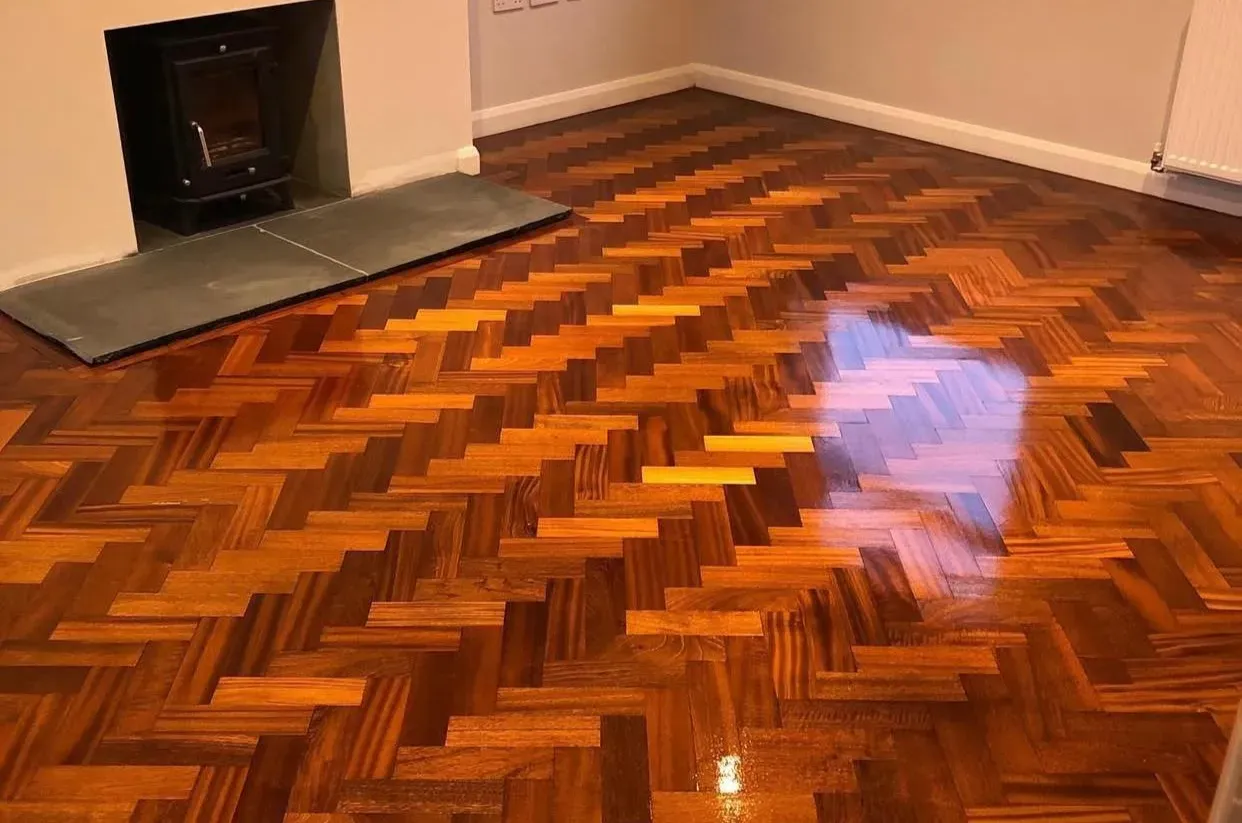
- Parquet Floor Sanding, Old Parquet Restoration & Maple Wood Sanding & Finishing – heritage floors done properly.
- Commercial Floor Sanding, Commercial Wood Floor Care & School Floor Maintenance – when downtime and durability count.
- Floor Insulation & Sound Proofing / Wood Floor Soundproofing – comfort you can feel (and not hear).
- Stair Stripping & Sanding & Stair/Banister Restoration – the makeover most people forget.
- Varnish Treatment, Wood Floor Scratch Repairs, Hearth Removal – the finishing touches that make life easier.
- Looking to install anew? See Laminate Flooring Installation and Hardwood Floor Sanding.
Now, to the nine questions that separate “looks fine for a fortnight” from “wow, why didn’t we do this sooner?”

1) “What dust-control system do you use—and how clean will my home be at the end?”
Why it matters: Dust is the silent saboteur. It lodges behind skirting, creeps into radiators, and ruins paintwork. If your prospective team shrugs and says, “We’ll cover things,” prepare for a powdery film over everything you own.
What a good answer sounds like: Specifics. HEPA-filtered extractors. Fully sealed sanding loops. Negative-pressure containment for sensitive areas. A daily tidy and a final, meticulous clean-down before handover. A pro will happily discuss their dust-free floor sanding kit and process.
Green flag: They can show photos or videos of containments and a dust-meter reading—or, at minimum, provide client references impressed by how clean things were.
Red flag: “We open the windows.” That’s not dust control; that’s wishful thinking.
CTA: Want the clean job? Call 0800 955 0015 and ask for our dust-free setup at Sanding Wood Floors.

2) “How will you evaluate my floor before you start?”
Why it matters: A sanding plan should reflect reality, not guesswork. Subfloor movement? Loose boards? Old shellac, bitumen, or wax? Historic repairs hiding under rugs? The right team diagnoses first and sands second.
What a good answer sounds like: “We perform a board-by-board inspection, moisture tests, fixings check, and subfloor assessment. If we find splits or broken tongues, we’ll use our wood floor repairs service, and for draughty gaps we recommend gap filling with strips or resin depending on movement.”
Green flag: They provide a written condition report with a sequence: repair → sand → fill → seal → finish.
Red flag: “We’ll see how it goes on the day.” Translation: Expect surprises—and extras.

3) “What sanding sequence will you use for this floor?”
Why it matters: Oak parquet is not maple strip. Old pine boards from the 1920s are not new engineered planks. Each material demands different abrasives, passes and pressure. It’s the difference between crisp, flat results and wavy, patchy disappointment.
What a good answer sounds like: “For your 1960s oak parquet we’ll start with a diagonal coarse cut to flatten, then progress through medium to fine using edge and corner detailers. We’ll finish with a final screen to prepare for sealing.” If they mention specialist expertise in parquet floor sanding or old parquet restoration, you’re in capable hands.
Green flag: They ask about previous coatings, stains or oils—and propose a test patch.
Red flag: “We always do 40–80–120.” Always? Floors don’t read manuals.

4) “Which finish suits my lifestyle—and why?”
Why it matters: The finish is your floor’s armour and character. Choose well and you’ll spend more time admiring than maintaining. Choose badly and you’ll spend every Saturday apologising to the broom.
What a good answer sounds like: “With kids, a dog and lots of light, you need a tough, UV-stable finish. We’d recommend a high-build lacquer or durable hardwax oil, applied in the correct coats, with proper cure time. We’ll show you sheen samples from our wooden floor finishing range and explain the pros and cons.” They might pair this with the right floor finishes & seals or a targeted varnish treatment.
Green flag: They bring a finish board, discuss maintenance compatibility, and leave you with written aftercare instructions.
Red flag: “We’ll slap on whatever we’ve got.” You’re not buying emulsion for a shed door.

5) “How will you protect adjacent areas, stairs and tricky details?”
Why it matters: Your floor doesn’t stop where the big machine does. Stairs, thresholds, hearth areas, banisters—these details distinguish competent from exceptional.
What a good answer sounds like: “We’ll protect and sequence your stairs with our stair stripping & sanding process, then finish the handrail and spindles via our stair & banister restoration. For the old fireplace, we offer hearth removal or neat termination details. We use fine detail sanders around frames and built-ins and isolate the work area.”
Green flag: They plan the order of rooms to preserve your access and keep dust from “clean” to “dirty,” not the other way round.
Red flag: “We’ll see if we can reach it.” If they can’t reach it, who will?
6) “What’s your plan for gaps, squeaks and draughts?”
Why it matters: A freshly sanded floor that whistles at night is like a new car with one square wheel. Beauty alone is not the brief. Comfort counts.
What a good answer sounds like: “We’ll secure loose boards, install gap filling with strips in the main traffic areas for stability, and use resin for micro-voids. Where noise travels, we can add soundproofing or floor insulation & sound proofing during the same visit.”
Green flag: They quantify what can be improved—and what can’t—before the quote.
Red flag: “Filling is extra—if you want it.” Of course it is; the question is how and why.

7) “How do you handle repairs and colour matching?”
Why it matters: Real floors live real lives. Water marks, pet scratches, radiator leaks, mismatched patches from past fixes—all common, all solvable with skill.
What a good answer sounds like: “We’ll use reclaimed boards for visible sections, splice repairs where needed, and feather new blocks into old patterns. For finishes, we blend stains and do sample patches until we match. Our wood floor scratch repairs and broader renovation & repair service covers this.”
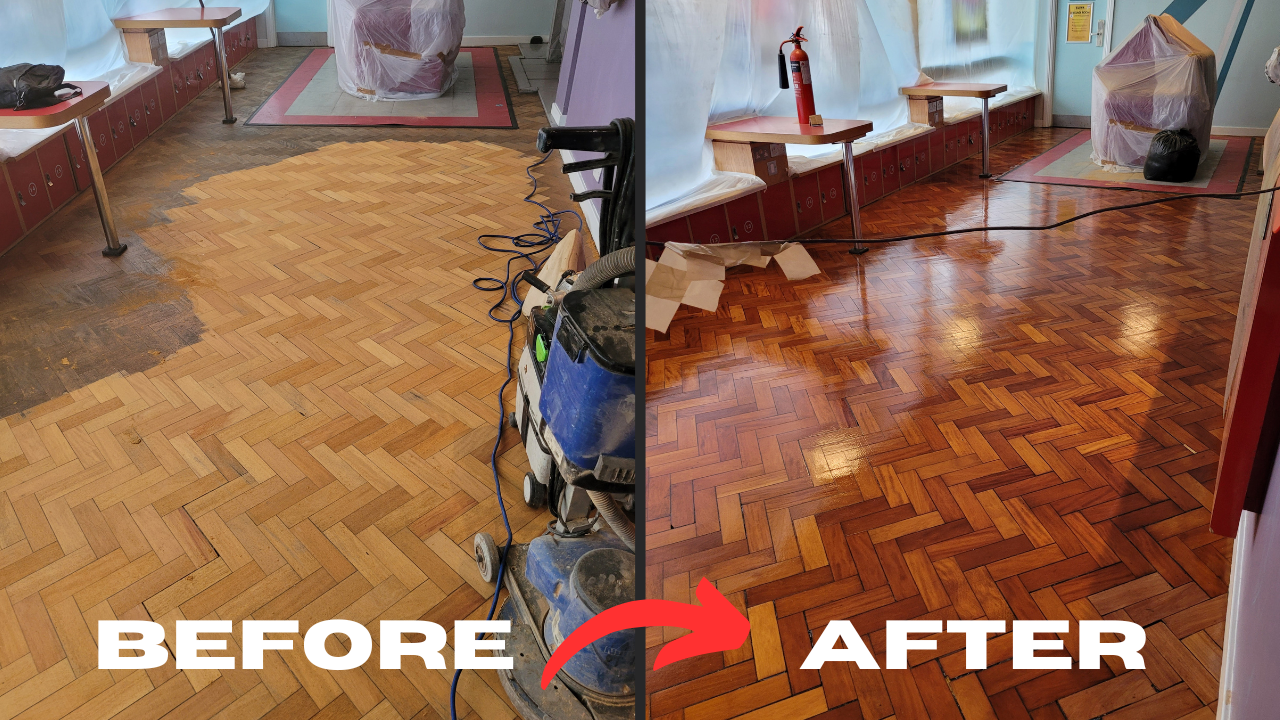
Green flag: They show before/after photos with tricky colour transitions and explain how lighting affects perception.
Red flag: “It’ll all look the same when it’s dry.” Will it? Or will it look “nearly right,” which is another way to spell wrong.

8) “What’s the timeline—and what access will I have while finishes cure?”
Why it matters: You have a life. You also have gravity. Walking on uncured finishes imprint marks you’ll see forever on sunny days.
What a good answer sounds like: “Day 1 repairs and coarse sanding. Day 2 progression sanding and gap filling. Day 3 fine sanding and first seal. Day 4–5 finish coats. You can walk in socks after X hours; replace furniture after Y; rugs after Z. We’ll schedule rooms to keep essential access.” If you’re a business or school, they’ll build around your trading hours with commercial floor sanding or a planned school floor maintenance window.
Green flag: A written schedule and cure timeline—plus advice on ventilation and temperature.
Red flag: “You can walk on it straight away.” That’s how footprints become fossils.
9) “What aftercare do you recommend—and what’s your maintenance plan?”
Why it matters: Floors are like good shoes: they look better for longer with routine care. No aftercare plan? That’s like buying a convertible in Britain and forgetting a roof.
What a good answer sounds like: “We provide a bespoke wood floor maintenance & care plan: correct cleaners (no steam), felt pads, traffic mats, annual inspection, and periodic sand & seal or refresher coats before wear cuts through.” If you need maximum durability (gyms, halls), they’ll propose a maintenance coating schedule and inspection diary.
Green flag: They leave written care notes and the exact product names you should use.
Red flag: “Just mop it.” With what? How often? On which planet?

Bonus Questions (that separate the pros from the pretenders)
- “Are you insured, and can I see it?” Insurance is dull—until it isn’t.
- “Who, exactly, will be at my property?” Names matter. So does accountability.
- “Do you do test patches?” Always ask for samples—especially with tricky species like maple.
- “How do you handle staircases?” See our stair stripping & sanding detail—because stairs make first impressions.
- “What if I want to install instead of restore?” Then explore laminate flooring installation or new hardwood and schedule hardwood floor sanding later to refresh.
The Psychology of Getting It Right (A Drayton Bird-style nudge)
People often hesitate because they fear making the wrong call. Ironically, that dithering is the costliest move of all. Leave your floor “for now,” and tiny scratches become grey traffic lanes, micro-gaps become draught tunnels, and light scuffing becomes deep wear that needs major wood floor renovation and repair. The clever move? Act while the floor whispers, not when it shouts.
When you Book a Sanding Team with a clear brief and good questions, you stop paying the hesitation tax. You trade weeks of “we must do something about that” for years of “why didn’t we do this sooner?”
A Simple, Proven Process (Our Way of Working)
- Survey & Diagnosis: We inspect, test moisture, assess subfloor, and quote transparently.
- Repairs & Prep: From loose boards to scratch repairs, we stabilise the canvas.
- Dust-Free Sanding: HEPA extraction, sealed zones, daily clean-downs. See dust-free sanding.
- Gap Filling & Detailing: Choice of strips or resin, crisp edges around frames, hearths, and stairs.
- Finishing: Sheen and system tailored to you—learn more under wooden floor finishing.
- Aftercare: Clear instructions and optional maintenance visits: maintenance & care.

Real-World Scenarios (So You Can Hear What “Good” Sounds Like)
A) Family Home with Sunlit Lounge
- Brief: Dog, two children, large windows.
- Approach: Repair, flatten, and seal. UV-stable lacquer via floor finishes & seals.
- Why: Easy cleaning, strong scratch resistance, colour stability.
- Result: “Our mornings are brighter—and quieter.” (Dogs love a smooth runway.)
B) Period Hallway with Parquet and Old Hearth
- Brief: Loose blocks, dating from the 1930s, with a defunct fireplace.
- Approach: Re-bed blocks, remove hearth (hearth removal), diagonal parquet sanding, subtle oil to enrich grain.
- Why: Respect the heritage, remove trip hazards, and extend life.
- Result: That crisp, “just-so” corridor your visitors notice first.
C) Busy Café (Commercial)
- Brief: Daily footfall, chairs scraping, spills inevitable.
- Approach: Out-of-hours commercial floor sanding, industrial lacquer system, future maintenance visits scheduled.
- Why: Minimum downtime, maximum durability, predictable costs.
- Result: A floor that sells the pastry before the customer sees the counter.
Frequently Asked (Sensible) Questions
Q: Will sanding make our house unlivable for a week?
A: Not with proper dust control and sequencing. We keep essential access open wherever possible, and with dust-free floor sanding, clean-downs are daily, not “at the end.”
Q: We’ve got gaps and a chilly ground floor—help?
A: Absolutely. Combine sanding with gap filling and consider soundproofing/insulation to make the space warmer and quieter.
Q: Parquet looks tricky—is it worth it?
A: When done right, parquet is the crown jewel. See parquet sanding and our old parquet restoration service for how we treat it.
Q: We’re a school/café/hotel—can you work around us?
A: Yes. We offer commercial wood floor care with off-peak scheduling and maintenance plans that fit your trading calendar.
Q: Our stairs are battered. Worth doing?
A: Stairs set the tone. Our stair stripping & sanding and banister restoration services make entrances sing.
Why the Words “Book a Sanding Team” Shouldn’t Scare You
You’ll see the phrase Book a Sanding Team in adverts and on websites, usually dressed up with “limited slots” and “sale ends Friday.” Ignore the theatre. Focus on substance:
- A clear inspection report beats a vague “day rate.”
- A written finish schedule outperforms a shrug and a tin of “whatever.”
- A maintenance plan saves you years more than a haggled £50 discount.
When you’re ready to Book a Sanding Team, use the nine questions above as your script. If the answers are confident, specific and documented—you’re dealing with professionals. If not, keep your wallet in your pocket.
Ready When You Are
- Call now: 0800 955 0015 — speak to a real specialist who’ll ask the right questions back.
- See what we do: Visit Sanding Wood Floors for dust-free sanding, meticulous wood floor sand & seal, and heritage-safe parquet restoration.
- Get a plan, not a pitch: We’ll map repairs, gap filling, finish options and aftercare in a simple, written proposal you can keep.
Small, honest promise: If another company gives you clearer answers to the nine questions above, use them. You’ll still have learned the right way to Book a Sanding Team—and that was the point.
Final Word: Beauty, Value, and The Joy of Correct Decisions
A freshly restored floor does more than look good. It changes how your space feels. Chairs slide without snagging; light bounces in a friendlier way; evenings become quieter. This isn’t just sanding; it’s domestic diplomacy—negotiating peace between wood, light, feet and time.
If that sounds like the result you want, call us on 0800 955 0015 today. Let’s Book a Sanding Team the smart way—and make your floor the best-behaved surface in the house.