Banquet Hall Floor Sanding in London | Expert Dust-Free Restoration
London’s banquet halls are the setting for weddings, conferences, gala dinners and community events. Many occupy handsome period buildings where original timber floors — wide-plank pine, solid oak strip or intricate parquet — have withstood years of heavy footfall, moving furniture and occasional spills. Over time these surfaces become worn, scratched, uneven or dulled, affecting both appearance and safety.
If you manage or maintain a banquet hall in London, professional intervention can restore performance and character with minimal disruption to your schedule. Whether you need targeted banquet hall floor maintenance in London, a complete banquet hall floor restoration in London or a reliable banquet hall floor sanding contractor in London, our team delivers practical, long-lasting results tailored to high-traffic event spaces.
We routinely work in busy venues and offer flexible out-of-hours and weekend scheduling so your regular activities or bookings are not affected. Our dust-extraction systems keep airborne particles to a minimum, protecting air quality and allowing a cleaner, faster handover. You can read more about our approach to commercial work on our commercial floor sanding page.
Many London banquet halls occupy historic or listed buildings. In these cases we apply the same careful techniques and conservation-grade methods used in our historic floor restoration work across London, protecting original character while delivering a durable, safe surface.
We use premium professional finishes from leading manufacturers including Bona, Osmo, Junckers and LOBA. The right system is always chosen after on-site assessment rather than a one-size-fits-all recommendation.

Our Step-by-Step Approach to Banquet Hall Floor Restoration in London
1. Initial Assessment and Planning
We begin with a detailed inspection of the timber species, construction method (strip, parquet, herringbone or block), previous finishes, moisture content and extent of wear or damage. We discuss how the hall is actually used — frequency of events, furniture movement, likelihood of dancing and any heritage constraints.
You receive clear written recommendations, finish options, realistic timescales and a transparent quotation. Where helpful we can provide initial guidance from photographs or video sent via WhatsApp or email before a site visit. Our full process is explained in our how it works guide.
2. Repairs, Board Replacement and Gap Filling
Loose boards or parquet blocks are re-secured or replaced with matching timber. Damaged sections are carefully let in so the floor remains structurally sound and visually consistent. Gaps — a frequent issue in older London floors — are filled with appropriate flexible compounds or traditional timber fillets, improving safety and making the surface easier to clean.
Parquet patterns are particularly common in London banquet and assembly halls. We handle these with care; you can see examples of our parquet floor sanding work.
3. Sanding and Surface Preparation
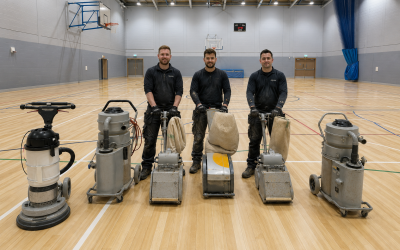
Modern dust-controlled machinery removes old coatings and levels the surface through progressive grits. Edges, corners and areas around fixed features receive detailed hand-finishing. The result is a clean, even substrate ready for the chosen finish. This stage is carried out with powerful extraction systems that capture the vast majority of dust at source.
4. Finishing Options
We select from high-performance systems suited to commercial use:
- Lacquer finishes — Water-based options such as Bona Traffic HD-type lacquers offer excellent durability and relatively fast return to service, ideal for busy event calendars.
- Hardwax oil finishes — Osmo Polyx-Oil and similar systems enhance the natural beauty of the timber and are repairable, suiting heritage settings particularly well.
- 2K finishes — Two-component systems provide maximum resistance to abrasion and chemicals for the most demanding environments.
We also work with Junckers and LOBA products where they best match the project requirements. The final specification always follows careful assessment of the floor’s condition and your priorities.
5. Aftercare and Ongoing Maintenance
Once the finish has cured we supply clear, practical aftercare instructions tailored to your cleaning regime and event schedule. Many clients choose a light ongoing maintenance programme — periodic buffing, recoating or a refresh coat of hardwax oil — so the floor never requires another full resand.
For detailed guidance on keeping timber floors in excellent condition between major works, please refer to our wood floor maintenance and care advice.

Frequently Asked Questions about Banquet Hall Floor Sanding in London
1. How long does banquet hall floor sanding usually take?
Most projects in London banquet halls take between three and seven working days, depending on the size of the floor, its current condition and the finish chosen. We often split the work into phases or carry it out during evenings, weekends or quieter periods so your events are not disrupted. A full written schedule is provided before work begins.
2. Will there be a lot of dust during the sanding process?
No. We use modern dust-controlled machinery with powerful extraction systems that capture the vast majority of dust at source. This keeps the working environment clean and protects air quality — particularly important in venues that may host events shortly afterwards.
3. Can you work outside normal hours or at weekends?
Yes. We regularly carry out banquet hall floor sanding during evenings, overnight, weekends and school holidays to minimise disruption to your diary. We discuss your preferred schedule at the assessment stage and build the programme around your bookings and any regular activities.
4. How soon after finishing can we use the hall again?
This depends on the finish selected. Some fast-curing lacquers allow light foot traffic within 12–24 hours and full use within a few days. Hardwax oils generally require longer curing times. We always give you clear guidance on when the floor will be ready for events and furniture.
5. What finishes work best in high-traffic banquet halls?
Durable water-based lacquers (such as Bona Traffic systems) or high-performance 2K finishes are popular for maximum wear resistance and lower maintenance. Hardwax oils from Osmo give a beautiful natural appearance and are repairable, which suits many heritage venues. We recommend the best option after assessing your specific floor and usage.
6. Do you work on parquet floors in London banquet halls?
Yes. Parquet and herringbone patterns are common in older London venues. We have extensive experience restoring these floors, carefully sanding to preserve the pattern while addressing loose blocks, gaps and worn surfaces.
7. Is floor sanding suitable for listed or historic buildings?
Yes, when carried out correctly. We work in many listed and conservation-area buildings across London, using appropriate methods and finishes that respect the building’s heritage. We follow conservation principles and can advise on suitable reversible options.
8. What preparation do we need to do before the team arrives?
The hall usually needs to be completely clear of furniture, staging and equipment. We will discuss any specific requirements (such as access for machinery or protection of adjacent areas) during the survey. We aim to make the process as straightforward as possible for you.
9. How much does banquet hall floor sanding cost in London?
Costs vary according to the size of the floor, its condition, the amount of repair work required and the finish chosen. We provide transparent, written quotations after a site assessment (or sometimes from clear photographs and measurements). There are no hidden extras.
10. Do you offer ongoing maintenance advice or contracts?
We provide detailed aftercare guidance with every project and can advise on a realistic maintenance programme to keep the floor looking good between major works. Many clients arrange periodic light refreshes rather than full resanding. You can find more information on our wood floor maintenance page.
11. Will sanding remove a lot of the wood thickness?
Modern sanding techniques remove only the minimum necessary to achieve a smooth, level surface — typically 1–2 mm in total across several passes. We assess the floor’s remaining thickness during the survey and will advise if any areas are too thin for further sanding.
12. Can you repair damaged boards or gaps as part of the work?
Yes. Repairing loose boards, replacing damaged sections and filling gaps is a standard part of our service. This improves safety, appearance and the long-term performance of the floor, especially in venues with heavy furniture movement.
13. What is the difference between full sanding and just buffing or recoating?
Buffing and recoating is suitable when the existing finish is still sound and only the surface needs refreshing. Full sanding is required when the finish is worn through, the floor is uneven, or there are significant scratches, stains or damage. We will advise which approach is most appropriate during the assessment.
14. Do you work in schools, churches and community halls as well as hotels?
Yes. We regularly restore floors in school assembly halls, church halls, community centres and other multi-purpose venues across London. We understand the need to work around term times, services and community bookings.
15. How do I get an accurate quote for my banquet hall?
The quickest way is to call us on 0800 955 0015 or send clear photographs and a short video of the floor via WhatsApp or email. For larger or more complex venues we usually arrange a free site survey. We aim to provide a clear written quotation promptly after assessment.
Why London Venue Managers Choose Our Service
- More than 25 years’ practical experience with commercial, school, church and heritage floors in London
- Dust-controlled processes that minimise disruption and cleaning time
- Flexible scheduling, including evenings, weekends and school holidays
- Premium finishes chosen for real-world performance in high-traffic venues
- Clear quotations and honest advice based on the actual condition and intended use of your floor
- Fully insured service with trained operatives
We cover venues throughout Greater London and the surrounding areas — see our areas we cover page for details. You can also read feedback from other London clients on our testimonials page.

Ready to Restore Your Banquet Hall Floors?
If your floors are looking tired, feel uneven or no longer reflect the quality of your venue, we can help. Call us today on 0800 955 0015 to discuss your requirements or arrange a free, no-obligation survey.
You can also send clear photographs or a short video of the floor via WhatsApp or email and we will provide an initial assessment and indicative quote promptly. We focus on straightforward communication and results that work for your diary, your budget and your guests.