Best Finish for Restaurant Wood Floors | Commercial Floor Experts
Restaurant timber floors work harder than almost any other commercial floor. From busy cafés and gastro pubs to fine dining restaurants, hotel dining rooms and historic coaching inns, wooden floors face constant foot traffic, chair movement, food spills, cleaning chemicals and changing moisture levels. Choosing the right finish is the difference between a floor that continues looking professional for years and one that quickly becomes scratched, dull and expensive to repair.
At Sanding Wood Floors, we help restaurant owners, facilities managers and hospitality businesses choose the most suitable finish for their timber flooring after professional restoration. Whether you require restaurant floor sanding, long-term restaurant wood floor maintenance, or need an experienced restaurant floor sanding contractor, our recommendations are always based on how your floor is actually used—not simply on appearance. Our work covers restaurants throughout London and the surrounding counties using modern dust-controlled equipment and premium commercial finishing systems. Learn more about our floor sanding services.

Why Restaurant Floors Need the Right Finish
Restaurant flooring experiences unique demands that domestic timber floors rarely encounter. Constant pedestrian traffic, tables being moved, food service, moisture around entrances, and regular commercial cleaning all place significant stress on the protective coating rather than the timber itself.
The correct finish should provide:
- Excellent resistance to abrasion.
- Protection against food and drink spillages.
- Simple daily cleaning.
- Reduced maintenance costs.
- A professional appearance throughout service.
- Long service intervals before future restoration.
Selecting the cheapest finish often results in earlier wear, increased maintenance and avoidable business disruption.
Our Timber Floor Assessment Before Recommending Any Finish
No two restaurant floors are identical. Before recommending a finish, we assess the timber itself, the existing coating, previous repairs and expected traffic levels. This allows us to recommend a finishing system that balances durability, appearance and future maintenance.
We inspect:
- Overall timber condition
- Moisture content
- Loose parquet blocks
- Damaged or split floorboards
- Movement between boards
- Previous stains and coatings
- Heavy wear zones
- Kitchen and bar entrance areas
Where required, damaged boards are repaired or replaced before sanding begins. Gap filling and stabilisation are completed before the final finishing system is applied to create a consistent, durable surface.
Restaurant Floor Restoration Process
1. Initial Assessment and Planning
Every project begins with understanding how the restaurant operates. We discuss opening hours, service periods, deliveries and cleaning schedules so restoration can be planned with minimal disruption. Many hospitality projects are completed during closures, overnight working or quieter trading periods.
For quotations we can often assess photographs, videos and floor measurements initially before arranging a site inspection where necessary.
2. Repairs, Board Replacement and Gap Filling
Professional restoration is about far more than sanding. Loose parquet blocks are securely bonded, damaged boards replaced with matching timber where practical, protruding fixings corrected and movement addressed before sanding starts.
Where appropriate we also complete:
- Resin gap filling
- Timber sliver insertion
- Board stabilisation
- Parquet repairs
- Local stain treatment
- Minor structural timber repairs
3. Sanding and Surface Preparation
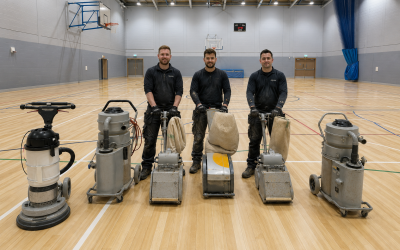
Professional belt sanding machines combined with edge sanders and dust extraction systems remove old finishes while producing a flat, smooth surface ready for sealing. Modern dust-controlled machinery captures the vast majority of airborne dust, making commercial restoration considerably cleaner than many people expect. turn0search1turn0search2
The sanding sequence is adjusted according to the timber species, previous coating and overall condition to ensure the final finish bonds correctly.

4. Choosing the Best Finish
The best finish depends on the restaurant’s style, expected traffic levels and maintenance strategy rather than one universal product.
Commercial Lacquer
For most restaurants, a high-quality commercial water-based lacquer remains our preferred recommendation. Modern lacquers provide outstanding durability, fast curing times and excellent resistance to spills while remaining straightforward to clean.
This option suits:
- Busy restaurants
- Hotel dining rooms
- Coffee shops
- Wine bars
- Public dining areas
Hardwax Oil
Hardwax oil produces a natural appearance with excellent repairability. Localised repairs can often be completed without sanding the entire floor, making it popular in boutique restaurants where maintaining the natural character of timber is a priority.
Traditional Oil Finish
Penetrating oils enhance the timber’s natural grain beautifully but generally require more regular maintenance than lacquer in high-traffic commercial settings.
2K Commercial Finishes
For particularly demanding hospitality environments, two-component (2K) finishing systems provide exceptional durability and chemical resistance. These premium coatings are commonly specified for restaurants experiencing continuous heavy footfall throughout the day.

Professional Products We Commonly Recommend
We use recognised commercial flooring systems from established manufacturers depending on the project requirements. These include:
Each manufacturer offers commercial systems suited to different environments, and we always recommend products based on the condition and use of the floor rather than brand preference alone.
5. Aftercare and Ongoing Maintenance
A professionally restored restaurant floor should never simply be left until it requires sanding again. Routine maintenance dramatically extends the life of the finish.
Our aftercare advice typically includes:
- Daily dry cleaning.
- Correct pH-neutral cleaning products.
- Prompt removal of spillages.
- Furniture protection.
- Entrance matting.
- Regular maintenance inspections.
- Periodic recoating before excessive wear develops.
Preventative maintenance is considerably more economical than allowing protective coatings to wear completely through to bare timber.
Why Businesses Choose Our Commercial Floor Restoration Team
- Over 25 years of practical commercial restoration experience.
- Dust-controlled professional machinery.
- Experience with heritage and listed buildings.
- Flexible evening, weekend and closure-period scheduling.
- Premium commercial finishing systems.
- Clear recommendations based on floor condition.
- Fully explained quotation process.
- Advice tailored to restaurants, cafés, pubs and hospitality venues.
Every recommendation is based on achieving the best long-term value rather than simply completing the quickest restoration.
Frequently Asked Questions About the Best Finish for Restaurant Wood Floors
1. What is the best finish for restaurant wood floors?
For most restaurants, a commercial-grade water-based lacquer is the best choice because it offers excellent durability, resists scratches and spills, and is easy to maintain. In restaurants where preserving the natural look of the timber is a priority, hardwax oil may also be a suitable option. The ideal finish depends on your floor’s condition, foot traffic and maintenance routine.
2. How long does a commercial wood floor finish last in a restaurant?
The lifespan of a finish depends on customer traffic, cleaning practices and the type of finish used. A high-quality commercial lacquer can last several years before requiring recoating, while hardwax oil may need more regular maintenance. Routine inspections and timely maintenance can significantly extend the life of the finish.
3. Which finish is better for busy restaurants: lacquer or oil?
Lacquer is generally the better option for busy restaurants because it forms a durable protective surface that withstands heavy foot traffic and frequent cleaning. Oil finishes provide a more natural appearance but usually require more regular maintenance in high-traffic commercial settings.
4. Can restaurant floors be sanded without creating excessive dust?
Yes. Modern dust-controlled sanding equipment captures the vast majority of sanding dust, making the restoration process much cleaner than traditional methods. While no sanding process is completely dust-free, professional extraction systems help minimise disruption to your business.
5. Will the restaurant need to close during floor restoration?
In many cases, work can be scheduled around your business hours. Professional floor sanding contractors often carry out projects overnight, during weekends or while the restaurant is closed to reduce disruption. The exact schedule depends on the size of the floor and the type of finish being applied.
6. How do I know if my restaurant floor needs sanding instead of just recoating?
If the existing finish has worn through to bare timber, there are deep scratches, stains, uneven surfaces or damaged boards, full sanding is usually the best solution. If the protective coating is only lightly worn, a maintenance recoat may be enough to restore protection without sanding back to bare wood.
7. Are commercial wood floor finishes resistant to food and drink spills?
High-quality commercial finishes are designed to resist everyday spillages from food and drinks when cleaned promptly. Although they provide excellent protection, standing liquids should never be left on the floor for extended periods as they can eventually damage both the finish and the timber.
8. Can damaged floorboards or loose parquet be repaired before refinishing?
Yes. Professional restoration normally includes repairing or replacing damaged boards, securing loose parquet blocks, filling gaps where appropriate and preparing the floor before sanding. Completing these repairs first ensures a stronger, more attractive and longer-lasting finish.
9. How should restaurant wood floors be maintained after refinishing?
Daily sweeping or vacuuming, regular cleaning with a manufacturer-approved pH-neutral cleaner and immediate removal of spills will help preserve the finish. Entrance matting, protective furniture pads and periodic maintenance inspections also reduce wear and extend the floor’s lifespan.
10. How can I get a quote for restaurant floor restoration?
You can usually receive an initial estimate by sending photographs, videos and approximate floor measurements. For larger or more complex projects, a site visit may be arranged to assess the timber’s condition before providing a detailed quotation and recommending the most suitable finishing system.

Read our recent blogs
What you should do next
If your restaurant floor is becoming worn, slippery, scratched or difficult to keep clean, we can recommend the most suitable restoration and finishing system for your business.
Call 0800 955 0015 today for professional advice. You can also send photographs, videos and approximate measurements by WhatsApp or email for an initial assessment. Where required, we will arrange a convenient site visit before providing a detailed quotation with no unnecessary surprises.