Church Floor Restoration in London | Church Hall Floor Sanding Experts
Churches across London, from historic parish churches in Westminster and Kensington to community churches in Hackney, Islington, Greenwich and Southwark, often rely on original timber flooring that has served congregations for decades. Constant foot traffic, weddings, funerals, community events, school partnerships and weekly services can gradually leave wooden floors worn, uneven, slippery and visually tired.
At Sanding Wood Floors, we specialise in church floor restoration throughout London, helping churches preserve the character of their buildings while improving safety, durability and appearance. Whether your floor consists of traditional pine boards, hardwood flooring, parquet blocks or timber stages, we provide practical restoration solutions tailored to the needs of active places of worship. Our team regularly works around service schedules, community activities and heritage considerations to minimise disruption while delivering exceptional results. With over 30 years of professional experience restoring timber floors across London, we understand the unique challenges church buildings present. Commercial floor sanding in London often requires careful planning, flexible scheduling and specialist finishes capable of handling heavy public use.

Why Church Floors Require Specialist Restoration
Church floors experience a very different type of wear compared to domestic properties. Many buildings contain original timber dating back several decades, and some have undergone multiple repairs and coating applications over the years.
Common issues we encounter include:
- Heavy wear in aisles and entrances
- Dark staining from moisture and historic leaks
- Damaged floorboards beneath pews and seating areas
- Loose parquet blocks
- Movement gaps caused by seasonal humidity changes
- Uneven surfaces creating potential trip hazards
- Old varnish and wax build-up
- Previous repair work that no longer matches surrounding timber
Each church floor is assessed individually. Rather than recommending unnecessary work, we provide practical advice based on the condition, age, construction and future use of the floor.
Church Floor Restoration Services Throughout London
Our restoration programmes are designed for churches, chapels, church halls, parish centres, religious schools and associated community buildings. As an experienced commercial floor sanding contractor in London, we understand the importance of preserving historic character while delivering modern performance and safety standards.
Timber Condition Assessments
Every project begins with a detailed inspection. We examine timber species, floor construction, moisture levels, previous coatings and any structural concerns that may affect restoration.
Many churches contact us initially by sending photographs, videos and approximate floor measurements. This often allows us to provide a preliminary estimate before arranging a site visit where required.
Floorboard Repairs and Replacement
Damaged timber boards are carefully removed and replaced with matching materials wherever possible. Our objective is to retain as much original flooring as practical while ensuring the floor remains structurally sound.
We regularly repair:
- Split floorboards
- Water-damaged timber
- Loose boards
- Worn thresholds
- Damaged stage flooring
- Subfloor movement issues

Step 1: Initial Assessment and Planning
Successful church floor restoration starts with careful planning. Churches often operate busy calendars involving worship services, community groups, choirs, fundraising events and educational programmes.
During the assessment stage we identify:
- Floor construction type
- Areas requiring repair
- Existing finishes
- Moisture concerns
- Access requirements
- Programme deadlines
- Suitable finishing systems
Where possible, work is scheduled around quieter periods, school holidays, planned closures or specific sections of the building to minimise disruption.
Step 2: Repairs, Board Replacement and Gap Filling
Before sanding begins, structural issues are addressed. This stage often determines the long-term success of the restoration.
Typical repair work includes:
- Replacing damaged boards
- Securing loose floorboards
- Repairing parquet sections
- Fixing movement issues
- Eliminating trip hazards
- Gap filling where appropriate
Depending on the floor’s condition, we may use timber slivers, specialist fillers or leave certain expansion gaps where movement must be accommodated naturally.
Step 3: Sanding and Surface Preparation
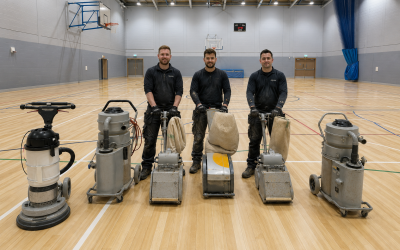
Modern dust-controlled sanding systems allow us to restore timber surfaces with minimal airborne dust. Our commercial-grade equipment removes old finishes, surface contamination and wear patterns while producing a smooth, even surface ready for finishing.
The sanding process typically removes:
- Old varnish
- Wax residues
- Paint contamination
- Surface staining
- Minor scratches
- Uneven wear patterns
Our dust-controlled systems help maintain cleaner working conditions within sensitive church environments and community buildings. Modern extraction equipment significantly reduces airborne dust during restoration work.

Step 4: Finishing Options
Selecting the correct finish is critical for churches and public buildings. The choice depends on usage levels, appearance preferences, maintenance expectations and drying time requirements.
Lacquer Finishes
Commercial-grade lacquers provide excellent durability and are often selected for busy churches with regular public access. Modern systems offer low odour, rapid curing and strong resistance to wear.
Hardwax Oil Finishes
Hardwax oils create a natural appearance that enhances the timber’s character while offering durable protection. These finishes are popular within heritage buildings where a traditional look is preferred.
Natural Oil Finishes
Oil systems penetrate the timber and highlight natural grain patterns. They can be easier to maintain in some environments because localised repairs are often possible without sanding entire areas.
2K Commercial Finishes
For particularly demanding environments, two-component commercial systems provide exceptional resistance to wear, cleaning chemicals and heavy foot traffic.
We regularly specify professional products from trusted manufacturers including Bona, Loba, Osmo and Junckers, selecting the most suitable system for each church floor.
Step 5: Aftercare and Ongoing Maintenance
A professionally restored church floor should remain attractive and durable for many years when properly maintained.
We provide tailored aftercare guidance covering:
- Cleaning procedures
- Protective entrance matting
- Furniture protection
- Maintenance schedules
- Periodic inspections
- Future recoating programmes
Many churches benefit from planned Commercial wood floor maintenance in London, helping extend finish life and reduce the frequency of major restoration projects.
Working Around Church Services and Community Activities
One of the most important aspects of church floor restoration is careful scheduling. We understand that churches remain active throughout the year and often support numerous community programmes.
Our team can often arrange:
- Phased restoration programmes
- Out-of-hours working
- Holiday-period scheduling
- Weekend projects where appropriate
- Work around weddings and major events
- Temporary access arrangements
This flexibility allows restoration work to proceed while minimising disruption to worship and community activities.
Frequently Asked Questions About Church Floor Restoration in London
How often should a church floor be professionally restored?
The frequency depends on foot traffic, the type of timber and the existing finish. Most church floors benefit from professional restoration every 10–20 years, while maintenance recoating may be recommended every few years to extend the life of the finish.
Can you restore historic church floors without damaging their character?
Yes. We regularly restore heritage timber floors and use restoration methods designed to preserve original features wherever possible. Damaged boards can often be repaired or carefully replaced with matching timber to maintain the floor’s historic appearance.
How long does church floor restoration take?
The timescale varies according to the size and condition of the floor. Smaller church halls may take only a few days, while larger churches with extensive repairs can require one to two weeks or more. We provide a clear programme before work begins.
Is floor sanding dusty inside a church?
Modern commercial sanding equipment uses advanced dust-extraction systems that significantly reduce airborne dust. While no sanding process is completely dust-free, today’s machinery keeps disruption to a minimum compared with older sanding methods.
Can restoration work be carried out around church services?
Absolutely. We understand that churches host regular worship services, community groups, weddings and events. Work can often be scheduled during quieter periods, school holidays, weekdays or in carefully planned phases to minimise disruption.
What types of church flooring can you restore?
We restore a wide range of timber floors, including solid wood floorboards, pine flooring, oak flooring, parquet flooring, hardwood floors, church hall floors, stages and community centre timber flooring.
Do you repair loose parquet blocks and damaged floorboards?
Yes. Repairs are a key part of the restoration process. We can secure loose parquet blocks, replace damaged boards, repair movement issues and carry out gap filling where appropriate before sanding and refinishing.
Which finish is best for a busy church floor?
The ideal finish depends on how the building is used. High-traffic churches often benefit from commercial-grade lacquers or two-component finishes, while heritage churches may prefer natural oils or hardwax oils that enhance the timber’s traditional appearance.
Can dark stains and water marks be removed from church floors?
Many stains can be significantly reduced or completely removed during the sanding process. However, the success of stain removal depends on how deeply the discolouration has penetrated the timber. We assess this during the initial inspection.
How do I get a quote for church floor restoration in London?
The quickest way is to send photographs, videos and approximate floor measurements. In many cases, we can provide an initial budget estimate from this information before arranging a site visit if a more detailed assessment is required.
Why Churches Across London Choose Sanding Wood Floors
- Over 30 years of wood floor restoration experience
- Extensive knowledge of heritage timber floors
- Dust-controlled sanding systems
- Fully insured commercial service
- Flexible project scheduling
- Professional-grade finishing systems
- Clear and transparent quotations
- Practical advice based on genuine floor condition
Our experience extends across churches, schools, community halls, educational facilities, hospitality venues and other public buildings throughout London. We tailor every restoration programme to the specific requirements of the building and its users.

What you should do next
If your church floor is showing signs of wear, damage or deterioration, we would be happy to provide practical advice and a no-obligation quotation. Call 0800 335 7565 today to discuss your project.
For a fast initial assessment, simply send photographs, videos and approximate measurements of the floor by email or WhatsApp. We can often provide preliminary guidance before arranging a site inspection where necessary.