Church Wooden Floor Sanding in London | Heritage Floor Restoration
In London’s historic churches, from the Victorian and Edwardian parish churches found across Islington, Hackney, Southwark, Camden and Tower Hamlets to those serving established communities in Westminster and the City fringes, wooden floors are far more than a practical surface. They form part of the building’s character, contribute to its acoustics and atmosphere, and have supported generations of worship, processions, choirs, weddings, funerals and community activities. Yet constant heavy footfall, combined with London’s variable climate, years of layered coatings and occasional amateur repairs, takes a visible toll.
Worn central paths, cupping boards, widening gaps that trap dust and debris, yellowed or flaking varnish, and areas made slippery when damp from umbrellas or winter weather are common. These issues not only affect safety and cleaning but can diminish the sense of care and reverence that visitors and congregations expect. Replacement is rarely the right answer — it is expensive, disruptive, generates significant waste and often removes irreplaceable historic fabric. Professional church Floor Sanding London restores both function and appearance while preserving the building’s heritage value.
Whether you are a churchwarden, member of a Parochial Church Council, facilities manager or architect responsible for a church or its attached hall, understanding the right approach makes all the difference. The same principles apply to church hall floor restoration london projects, where community use often creates even higher wear patterns. If you need a trusted church Floor sanding contractor in London or reliable church floor maintenance in London going forward, the following guide sets out exactly what is involved, why experience matters, and how modern techniques deliver lasting, low-maintenance results with minimal disruption to church life.

Understanding the Specific Challenges of London Church Wooden Floors
London church floors are typically solid softwood (pine or deal) or hardwood (oak), with some Victorian and Edwardian examples featuring parquet or herringbone patterns in naves, side aisles or church halls. Many have received multiple generations of varnish, wax, polish or even bitumen-based treatments. The result is often a thick, uneven build-up that has become brittle, discoloured or slippery.
Central aisles and processional routes suffer the heaviest wear, while areas under fixed pews can remain relatively protected yet still accumulate dust and old coatings. Common problems include:
- Cupping, crowning or springy boards caused by age, minor moisture fluctuations or previous poor repairs
- Gaps that widen over decades, collecting debris and making thorough cleaning difficult
- Trip hazards from raised edges, worn thresholds or uneven thresholds at doorways and chancel steps
- Water marks, candle wax or other stains that have penetrated old finishes
- Loss of the warm, natural timber character that enhances the spiritual atmosphere
Additional factors make church work distinctive. Dust must be controlled rigorously to protect pipe organs, embroidered textiles, service books, altar cloths and stained glass. Many buildings are listed or sit within conservation areas, so any intervention should be sensitive, reversible where possible and documented appropriately. Churches also operate to strict calendars — Sunday services, midweek activities, weddings, funerals, festivals and community groups cannot simply pause for weeks.
These challenges are similar to those we regularly address in high-traffic commercial and institutional settings. Our experience with commercial floor sanding and school floor sanding directly informs the careful planning and dust-controlled methods we bring to every church project. The same careful approach applies to community centre floor sanding and church hall work, where usage patterns are often equally demanding.

Why Professional Restoration is the Right Choice for Your Church
DIY sanding or cheap “quick fixes” frequently create more problems than they solve — swirl marks, uneven surfaces, damaged historic boards or finishes that fail prematurely in high-traffic areas. Full replacement destroys heritage fabric, costs far more and causes prolonged disruption. Professional restoration, by contrast, typically costs a fraction of replacement while delivering a floor that is safer, easier to clean, more attractive for weddings and events, and better protected for the long term.
A well-executed project improves slip resistance, reduces cleaning time for volunteer teams, enhances the visual warmth of the interior and can even support better acoustics in some spaces. For Parochial Church Councils, it also demonstrates responsible stewardship of the building. We see the same principles at work across our wood floor restoration and victorian period floorboard restoration projects throughout London.
Our Detailed Restoration Process
Initial Assessment and Planning
Every successful church project begins with a thorough, no-obligation site survey. We examine timber species and condition, identify previous finishes through careful inspection and test patches where needed, assess structural issues such as loose or springy boards, measure the extent of wear patterns and evaluate access constraints around pews, raised platforms or narrow doorways.
We also discuss your priorities — whether the emphasis is on restoring original colour and character, achieving maximum durability for heavy use, minimising downtime or working within a specific budget. Moisture content, subfloor condition and any known history of previous works are noted. For listed buildings we can supply the documentation often required for faculty applications or conservation discussions.
Photographs from multiple angles, rough dimensions and even a short WhatsApp video walkthrough allow us to provide an initial assessment quickly. You receive a clear written report, transparent quotation and a proposed programme tailored to your calendar. This stage alone often reveals issues that would be missed by less experienced contractors and prevents costly surprises later.
Repairs, Board Replacement, and Gap Filling
Sound preparation underpins every long-lasting result. Damaged or rotten boards are carefully removed and replaced with matching timber, fixed using traditional or modern methods appropriate to the age of the floor. Loose boards are re-secured to eliminate movement and squeaks.
Where parquet or herringbone patterns exist, individual blocks can be lifted, repaired or replaced while preserving the original layout and fixing methods. We pay particular attention to parquet floor restoration techniques that respect the geometry and historic integrity of these decorative floors.
Gaps are filled using timber fillets, flexible resin systems or traditional methods chosen according to the expected movement of the floor and the desired final appearance. Old bitumen or wax residues are treated carefully to ensure the new finish bonds properly. All repairs aim to be sympathetic, structurally sound and visually harmonious so the restored floor looks coherent rather than patched.
These techniques draw directly on our specialist floor restoration and gap filling expertise developed across hundreds of London period and commercial properties.
Sanding and Surface Preparation
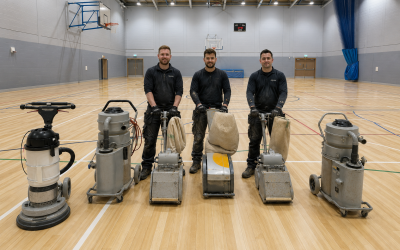
We use advanced dust-controlled equipment, including planetary and triple-head sanders with high-efficiency HEPA filtration, to achieve a flat, even surface while keeping airborne dust to an absolute minimum. Progressive grit sequences remove old finishes and imperfections without introducing swirl marks, waves or chatter that can appear on long runs of church flooring.
Edges, corners and areas around fixed pews or fixtures receive careful attention using edging machines and hand work where necessary. Water marks and localised stains are treated appropriately before the final fine sanding stages. The floor is then thoroughly cleaned and prepared so the chosen finish bonds correctly and performs as expected.
Our dust-controlled methods are the same ones trusted across our dust free floor sanding and hardwood floor sanding work. They are especially important in churches where dust can settle on textiles, books and musical instruments. For heritage floors we also draw on the careful approaches outlined in our guide to floor sanding in period homes.

Finishing Options: Choosing the Best Protection for Your Church
The finish determines both the final appearance and the long-term performance. We discuss options in detail so you can choose with confidence.
High-performance two-component water-based lacquers, such as Bona Traffic HD, offer exceptional durability against scuffs, chemicals and heavy footfall while remaining relatively quick to return to use. They are available in matt or satin sheens that reduce glare on service sheets and create a calm, dignified appearance. These systems are widely used in demanding public spaces and perform well in the central aisles of busy London churches.
For a more natural look and feel, penetrating hardwax oils from brands such as Osmo provide excellent protection while allowing the timber to breathe — particularly beneficial in older buildings. They enhance the wood’s colour and grain without forming a thick film and are easier to spot-repair if localised damage occurs later. Maintenance is generally straightforward, though very high-traffic zones may benefit from periodic light recoats.
We also work with other professional systems from manufacturers such as Loba where specific performance characteristics are required. The number of coats, expected cure times and maintenance implications are always explained clearly. Proper curing is essential for maximum durability — our recent guide to cure times that save finishes explains why allowing adequate time before heavy use protects your investment.
Matt and ultra-matt finishes are frequently chosen for churches because they minimise reflections and maintain a traditional, welcoming appearance. We can demonstrate samples on site so the final effect can be visualised in your specific lighting conditions. Guidance on choosing and maintaining matt finishes is available in our detailed article on creating a beautiful matt finish.

Aftercare and Long-Term Maintenance Planning
Once the final coat has cured we provide clear written aftercare instructions suited to volunteer cleaning teams. Daily dry mopping, occasional damp cleaning with approved pH-neutral products and the use of felt pads on furniture legs protect the finish and extend its life significantly.
We also offer tailored maintenance programmes for churches. These typically include periodic inspections, spot repairs where needed, buffing and recoating at appropriate intervals. A proactive approach keeps floors looking fresh, prevents small issues from becoming large ones and spreads costs predictably. Many churches find that a well-maintained floor requires a full resand far less frequently than one left to deteriorate.
Our wood floor maintenance and care guidance and ongoing support are designed specifically for busy environments. Insights from high-traffic venues are shared in our recent articles on best floor finishes for pubs, restaurants and high-traffic venues and restoring worn commercial floors without full replacement.
Heritage Sensitivity and Working with Listed or Conservation-Area Churches
Many London churches are listed or lie within conservation areas. We approach these projects with extra care, using reversible or sympathetic finishes where appropriate, minimising intervention on historic fabric and providing the documentation often needed for approvals. Our work on victorian period floorboard restoration and period properties across London has given us extensive experience in balancing performance with heritage requirements.
We follow principles consistent with guidance from the Church of England on historic floors, prioritising retention of original material, appropriate repair techniques and finishes that do not trap moisture or cause future problems. Communication with architects, surveyors and the Parochial Church Council is clear and proactive throughout.
Scheduling Work Around Church Activities with Minimal Disruption
Churches operate to demanding calendars. We plan projects around services, weddings, funerals, festivals and community programmes wherever possible. Evening, overnight or weekend working is frequently arranged, allowing the building to return to normal use quickly. Our recent guide to weekend commercial floor sanding in London explains how similar scheduling works successfully in other busy London venues.
Pews can often remain in place or be moved sectionally with careful protection. Daily clean-down and reinstatement of the space form part of every project. Noise, dust and access are managed considerately so that prayer, meetings or children’s groups can continue with minimal impact.
Our Track Record and Commitment to Churches Across London
With more than 30 years’ experience restoring wooden floors in London churches, church halls, schools and other heritage public buildings, we bring both technical skill and genuine understanding of the unique demands these spaces place on flooring. We use premium professional products, advanced dust-controlled equipment and trained operatives who respect the sacred nature of the environment.
Every quotation is based on a proper site assessment rather than guesswork. We provide public liability insurance, risk assessments and method statements as standard. References from previous church and community projects are available on request. Our goal is always the same: a floor that looks cared for, performs reliably under real-world use and protects the building’s heritage for future generations.

Frequently Asked Questions
How long does a typical church floor sanding and restoration project take?
Most nave or main church projects are completed within 5 to 12 working days, depending on the size of the floor, the amount of repair work required and the chosen finish. Church halls are often quicker. We always provide a detailed programme after the survey so you can plan around services and events.
Will the work disrupt our Sunday services or midweek activities?
We plan every project around your calendar. Many churches choose evening, overnight or weekend working so that the building remains fully usable on Sundays. We protect pews and fixtures carefully and carry out a full clean-down at the end of each day.
Is dust really controlled during church floor sanding?
Yes. We use professional-grade dust extraction systems with HEPA filtration on all our sanders. Airborne dust is kept to an absolute minimum, which is essential when working around organs, textiles, books and stained glass. Churches are often surprised at how little additional cleaning is needed afterwards.
Which finish is best for a church floor — lacquer or hardwax oil?
It depends on your priorities. Two-component lacquers such as Bona Traffic HD offer excellent durability and faster return to use in high-traffic central aisles. Hardwax oils (such as Osmo systems) give a more natural appearance and are easier to spot-repair. We discuss both options on site and can show samples so you can see the finished effect in your lighting.
How much does church floor sanding cost in London?
Costs vary according to floor size, condition, repairs needed and the finish chosen. Restoration is almost always significantly less expensive than replacement while preserving the historic fabric. After a site survey we provide a clear, fixed quotation with no hidden extras.
Do you work in listed churches or conservation areas?
Yes. We have extensive experience with listed buildings and conservation-area churches. We use sympathetic techniques, reversible finishes where appropriate and can supply the documentation often required for faculty applications or discussions with conservation officers.
Can you repair parquet or herringbone floors in churches?
Yes. We regularly repair and restore parquet and herringbone patterns, carefully lifting, repairing or replacing individual blocks while preserving the original layout and character. This work is carried out as part of our specialist parquet restoration service.
How long before the church can be used again after the final coat is applied?
Light foot traffic is usually possible within 24–48 hours, depending on the finish. Full hardness and maximum durability take longer (typically 5–7 days for lacquers). We provide clear guidance on cure times and temporary protection measures so you can plan safely.
Do you move the pews or work around them?
We can work around fixed pews where necessary, although moving them sectionally often allows better access and a more even result. We always discuss the options during the survey and protect all fixtures thoroughly with appropriate sheeting and barriers.
How often will the floor need maintenance after restoration?
With a good commercial-grade finish and sensible care, many churches enjoy 4–7 years before a light recoat is beneficial. We can provide a tailored maintenance programme with periodic inspections and spot repairs to keep the floor looking its best and extend the time between major works.
Will sanding remove too much of the original floorboards?
No. We use controlled sanding techniques and only remove what is necessary to achieve a sound, level surface. Historic boards are treated with care and we avoid aggressive planing that could thin them excessively. In most cases the original character of the timber is preserved and enhanced.
Can you match the existing colour or restore the original timber tone?
Yes. We can lighten floors that have become dark with age or old coatings, or apply subtle toning to achieve a more uniform appearance while keeping the natural variation that gives character to older floors.
What preparation does the church need to do before work starts?
We usually ask for clear access on the days we are working and for any loose items (rugs, kneelers, music stands, etc.) to be moved. We handle protection of pews, altars and other fixed items ourselves. A short site meeting before work begins ensures everything is clear.
Do you offer ongoing maintenance contracts for churches?
Yes. Many churches prefer the peace of mind of a planned maintenance programme that includes regular inspections, cleaning advice and scheduled recoats. This approach spreads cost and prevents small issues from becoming expensive problems later.
How do we get an accurate quote for our church?
The best way is to arrange a free, no-obligation site survey. We can also provide an initial indication from good photographs (taken from several angles), rough measurements and details of any known issues or upcoming events. Many church committees start with a WhatsApp video call or site photos for a quick initial assessment.
Next Steps: Protect and Enhance Your Church Floors Today
If your church or church hall floors are showing signs of wear, or you want to plan ahead with a maintenance programme that keeps them looking their best, we are ready to help.
Call our specialist team on 0800 955 0015 for a free, no-obligation survey and honest assessment tailored to your building and calendar. Alternatively, send photographs from several angles, rough dimensions or a short video via WhatsApp or email and we will provide initial thoughts and a clear quotation promptly. We understand the importance of these spaces and treat every project with the respect and care they deserve.
Let us help you restore safety, beauty and practicality to your church floors while preserving their historic character for the years ahead.