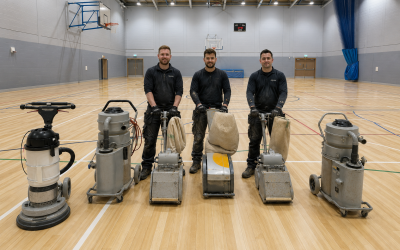
Commercial Wood Floor Refurbishment London | Dust-Free Restoration Experts
Across London’s commercial buildings — from the busy school halls of Camden and Islington to the high-street retail spaces of Chelsea, the parish halls of Southwark, and the boardrooms and offices of the City — timber floors take a daily pounding. Heavy footfall, furniture movement, cleaning regimes and years of wear gradually strip away finishes, open gaps, loosen boards and leave surfaces looking tired, uneven or even unsafe.
If you manage a school, church, community centre, restaurant, office or retail premises, professional commercial wood floor refurbishment restores both appearance and performance without the cost or disruption of full replacement. At Sanding Wood Floors we have specialised in this work for more than 25 years, delivering dust-controlled, carefully scheduled projects that keep your building open and your floors looking and performing as they should.
Whether you need commercial floor sanding in London for a single hall or a multi-room programme across several sites, we plan every stage around your operational needs.


Why London Commercial Floors Need Specialist Refurbishment
London’s commercial timber floors are rarely ordinary domestic boards. Many are original Victorian or Edwardian pine and oak, period parquet in churches and schools, or modern maple sports surfaces in academies and leisure centres. These floors face:
- Intense, concentrated traffic in corridors, entrances and assembly areas
- Chair legs, trolleys and equipment that create scratches and dents
- Old, failing coatings that become slippery or flaky
- Seasonal movement that opens gaps and loosens blocks
- Health-and-safety requirements for even, non-slip surfaces
Left unaddressed, these issues shorten the life of the timber, increase cleaning costs and can create trip hazards. A well-executed refurbishment solves the problems at source and extends the floor’s service life by many years.

Our Commercial Wood Floor Refurbishment Process
We follow a clear, transparent sequence designed for real commercial environments.
1. Initial Assessment and Planning
Every project begins with a thorough condition survey. We examine timber species, moisture content, structural soundness, existing finish and patterns of wear. We also discuss your timetable — school terms, service hours, public access or overnight working — so the programme fits your operations rather than the other way round.
You receive a written quotation based on site measurements or, where appropriate, photos and videos you send us. There are no hidden extras. We explain the recommended approach, the products we will use and the realistic downtime for each stage. Many clients start with a free site visit; others prefer a rapid desktop assessment from clear photographs.
2. Repairs, Board Replacement and Gap Filling
Before any sanding begins we make the floor structurally sound. Loose or damaged boards are secured or replaced with matching timber. Lifted or missing parquet blocks are re-bedded or carefully substituted. Wider gaps are filled with timber strips; finer joints receive a resin-and-dust mix matched to the floor’s colour. This stage is essential on older London floors where movement has opened joints over decades.
Our experience with heritage and high-traffic commercial surfaces means repairs are carried out to last, not simply to look neat for the next inspection.
3. Sanding and Surface Preparation
We use industrial dust-extraction systems that capture the vast majority of dust at source — a practical necessity in occupied schools, churches, offices and public buildings. Progressive grit sequences level the surface, remove old coatings and prepare a clean, uniform substrate ready for the chosen finish. Edges, corners and awkward areas receive the same attention as the main field.
This is genuine commercial floor restoration in London, not a light buff. The result is a flat, smooth floor that will accept a commercial-grade coating evenly and hold it for years.
4. Finishing Options — Lacquer, Oil, Hardwax Oil and 2K Systems
The finish is chosen according to the floor’s use, the building’s character and your maintenance preference.
- Water-based and 2K lacquers (including systems from Bona such as Traffic HD and products from Junckers) deliver maximum durability and rapid return to service. Ideal for schools, sports halls, retail and high-traffic corridors.
- Hardwax oils (including Osmo Polyx-Oil ranges) give a natural, low-sheen appearance that is easy to spot-repair — often preferred in churches, period offices and hospitality venues.
- Specialist sports and anti-slip formulations meet the friction requirements of PE lessons and multi-use halls.
We never use domestic-grade products on commercial floors. Every coating is selected for the actual traffic the floor will receive.
5. Aftercare and Ongoing Maintenance
A refurbished floor still needs sensible care. We provide clear written guidance on cleaning products, re-coat intervals and simple daily routines that protect your investment. For larger organisations we can set up scheduled maintenance programmes so the surface never again reaches a state of heavy wear. Many schools and community centres combine our work with regular school floor maintenance plans that keep costs predictable.

Practical Advantages for London Decision-Makers
- Dust-controlled machinery keeps classrooms, offices and public areas usable.
- Flexible scheduling — evenings, weekends, half-terms, summer holidays and overnight shifts — minimises disruption.
- Heritage-aware methods for listed churches, conservation-area buildings and original school floors.
- Fully insured, experienced teams accustomed to working around staff, pupils, congregations and the public.
- Premium professional products only — no short-cuts with materials that will fail under commercial use.
We regularly work with property managers, school business managers, church wardens, facilities teams and independent business owners across every London borough. The same standards apply whether the floor is a small parish hall or a large multi-room office suite.

Frequently Asked Questions
What does commercial wood floor refurbishment involve?
Commercial wood floor refurbishment is a complete restoration process for high-traffic timber floors. It includes a full condition survey, structural repairs and board or parquet replacement where required, professional gap filling, dust-controlled sanding back to clean timber, and the application of a durable commercial-grade finish chosen for the specific use of the space.
How long does commercial wood floor refurbishment take in London?
Most projects take between one and five working days depending on the size of the floor, its condition and the number of finish coats required. Smaller offices or parish halls can often be completed over a weekend, while larger school halls or multi-room programmes are usually phased around your operational timetable.
Can the work be carried out overnight or at weekends?
Yes. We regularly schedule commercial floor sanding and refurbishment during evenings, overnight, weekends, bank holidays and school holidays. This approach is standard for restaurants, offices, schools and churches across London so that normal activities continue with the least possible disruption.
Is the sanding process dusty?
No. We use industrial dust-extraction systems that capture the vast majority of dust at source. These machines are designed specifically for occupied commercial, educational and public buildings, keeping classrooms, offices, corridors and halls far cleaner than traditional methods.
How much does commercial wood floor refurbishment cost?
Typical costs range from £22 to £35 per square metre for full sanding plus a commercial lacquer system. The final price depends on floor condition, the amount of repair work needed and the chosen finish. We always provide a fixed written quotation after assessing the floor, either on site or from clear photographs and measurements.
What finishes are best for high-traffic commercial floors?
We specify professional systems only. Two-component water-based lacquers such as Bona Traffic HD and Junckers HT700 deliver maximum durability and rapid return to service. Hardwax oils (including Osmo ranges) are ideal where a natural appearance and easy spot repair are preferred. The choice is always matched to the expected traffic and the character of the building.
Do you work in schools, churches and community buildings?
Yes. Schools, churches, community centres and parish halls form a large part of our commercial work. We are experienced in scheduling around term dates, services, public access and safeguarding requirements, and we select finishes that meet the practical and aesthetic needs of each type of building.
How do I get a quotation?
Call 0800 955 0015 or send clear photographs and approximate measurements of the floors. We can provide an initial assessment remotely in many cases, or arrange a free site survey where more detailed inspection is required. You will receive a clear written quotation with no hidden extras.
Will the refurbished floor be slip-resistant?
Yes. Commercial-grade finishes can be specified with the appropriate slip resistance for the intended use, including sports halls, school corridors, entrances and public areas. We advise on the correct sheen level and any specialist anti-slip additives needed to meet health-and-safety requirements.
How often should commercial wood floors be refurbished?
Under normal commercial use, a full refurbishment is typically required every 7–12 years. High-traffic zones such as entrances and corridors may need attention sooner. Regular maintenance recoats can significantly extend the interval between full sandings and keep costs predictable.
Can you work on listed or heritage buildings?
Yes. We regularly restore original timber floors in listed churches, conservation-area properties and period commercial buildings across London. Methods and finishes are chosen to respect the age and character of the timber while still delivering a durable, practical surface.
What happens if boards or parquet blocks are damaged?
Damaged, loose or missing boards and blocks are repaired or replaced with carefully matched timber before sanding begins. Loose parquet is re-bedded, and wider gaps are filled with timber strips or resin as appropriate. The floor must be structurally sound before any finish is applied.
How soon can the floor be walked on after finishing?
Most water-based commercial lacquers allow light foot traffic within 8–12 hours and full use within 24 hours. Hardwax oils generally require a little longer. Exact times depend on the product system chosen and site conditions; we always confirm the re-occupation schedule before work starts.
Do you provide aftercare and maintenance advice?
Yes. Every project includes clear written guidance on daily cleaning, suitable products and recommended re-coat intervals. For larger organisations we can also set up scheduled maintenance programmes so the floor never again reaches a state of heavy wear.
Why choose refurbishment instead of full floor replacement?
Professional refurbishment is almost always more cost-effective, faster and less disruptive than ripping out and replacing a timber floor. When carried out correctly it restores both appearance and performance while retaining the original character of the boards — often for a fraction of the cost of a new floor.

Get a Clear Quote for Your Premises
If your timber floors are looking worn, feeling uneven or simply no longer reflecting the standard of your building, professional commercial wood floor refurbishment is almost always the most cost-effective route.
Call us on 0800 955 0015 for straightforward advice. Alternatively, send clear photographs or a short video of the floors together with approximate measurements and we will provide an initial assessment and quotation. Site visits are arranged promptly where needed.
As an established commercial floor sanding contractor in London, we deliver reliable results that stand up to daily use and keep your floors looking professional for years to come.