Office Floor Sanding: Dust-Free, Rapid-Cure, Work-Friendly
If you’re planning Office Floor Sanding, you’re already one of the smart ones. Why rip out thousands of pounds’ worth of perfectly good timber when a skilled team can revive it—often in less time than it takes IT to reset everyone’s passwords? The fear, of course, is disruption: ringing sanders, dusty desks, frazzled staff, and a finance director asking why Thursday looked like a snow globe.
Here’s the good news: the right plan keeps your people working, your clients unbothered, and your floors reborn. In this guide, I’ll show you five practical, battle-tested ways to maintain productivity during Office Floor Sanding—without turning your workplace into a building site.
Before we dive in, a few useful resources for your shortlist (because momentum loves a next step):
- Explore dust-free floor sanding to minimise airborne particles around sensitive equipment.
- See how wood floor maintenance and care protects your investment—and keeps future disruption low.
- Planning a wider refresh? Our commercial floor sanding service is purpose-built for offices, hotels and retail spaces.
- Bookmark commercial wood floor care services for ongoing support once the sanding is done.
And yes—if you like speaking to humans who show up, tidy up, and follow up—ring us on 0800 955 0015. We’re Sanding Wood Floors, and we’ve spent years making wooden floors look sensational while offices keep humming.

Why Office Floor Sanding is the clever option (and how to sell it to your CFO)
Replacing a floor is wasteful, slow, and expensive. Office Floor Sanding is more like a facelift: remove the tired top layers, repair blemishes, and finish with a durable seal that shrugs off the daily stampede of laptops, lattes and late-running meetings.
- Lower cost than replacement (and typically allowable as maintenance rather than capital expenditure—ask your accountant).
- Faster turnaround with staged work and quick-cure finishes.
- Better sustainability story—no landfill guilt, fewer materials, and a carbon-lighter footprint.
Pair sanding with the right finish and you’ll create a surface that’s easier to clean and quieter underfoot. Explore floor finishes & seals and wooden floor finishing to see your options—from hard-wearing commercial lacquers to handsome oils that age like good leather.
Now to the question that really matters: how do we keep productivity up while the work happens? Here are five ways that actually work in real offices with real deadlines.
1) Phase the work with ruthless precision (and a floor plan that thinks like your business)
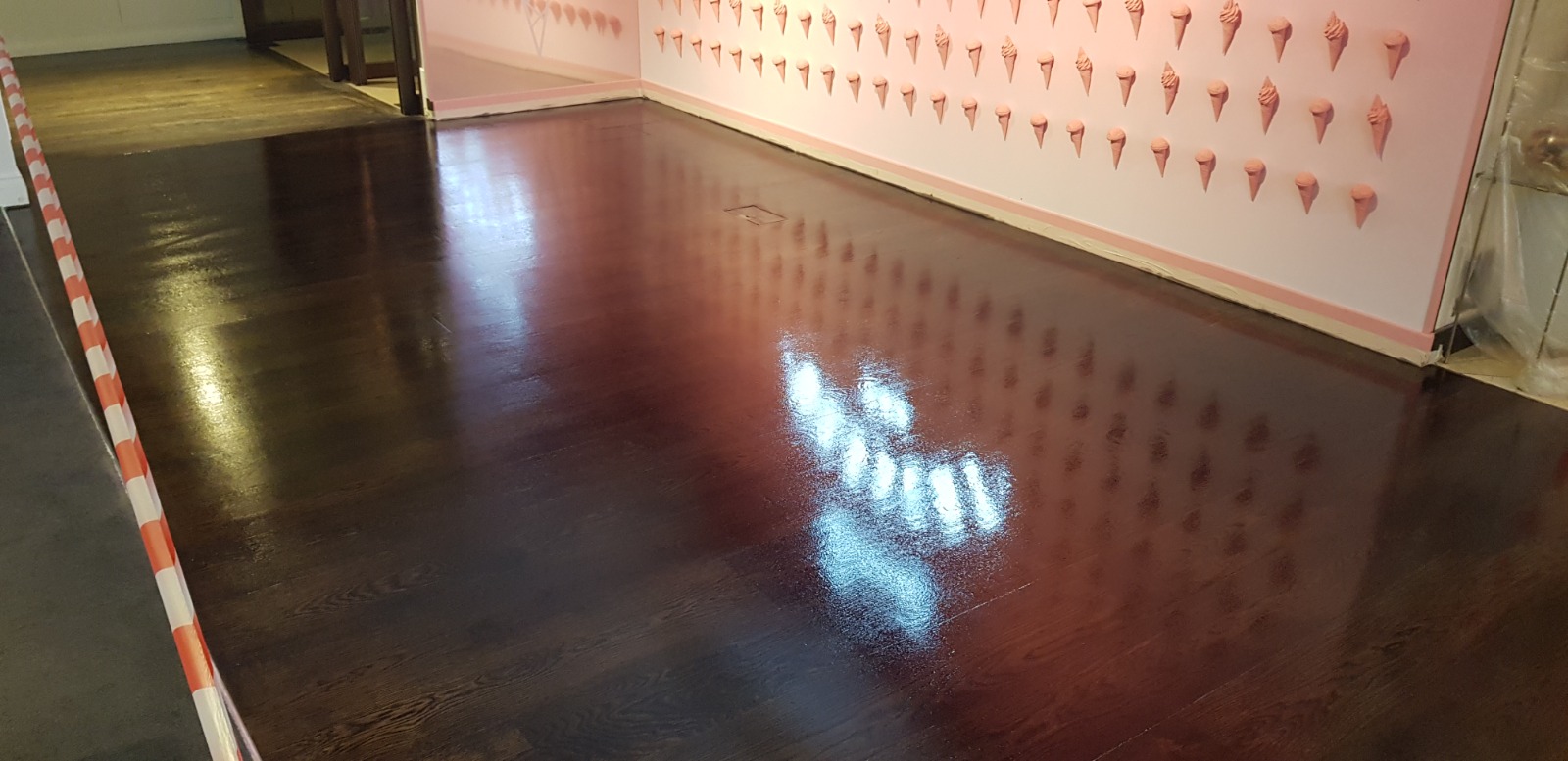
Productivity rises or falls on sequencing. Your office is a living system—teams, corridors, kitchens, meeting rooms, printer nooks, escape routes. Sand the wrong zone at the wrong time and you’ve blocked the artery that feeds everything else. The solution: a phasing plan that mirrors your workflow.
How to plan the phases
- Map your zones. Reception, walkways, desk banks, collaboration spaces, meeting rooms, kitchens, IT hubs, escape routes.
- Rank zones by dependency. If 80% of staff cross a corridor every hour, that corridor is a phase of its own—done out of hours.
- Pair phases with your calendar. Big pitch Tuesday? Don’t sand the sales bank on Monday. Quarterly close on the 30th? Protect finance like crown jewels.
- Use micro-windows (lunchtimes, late afternoons) to apply quick coats in low-traffic pockets.
Scheduling tactics that win
- Out-of-hours blitzes for the “choke points” (entrances, main corridors) so the office opens as normal.
- Weekend turns for the biggest zones—Monday feels like magic.
- On-the-day stand-ups (five minutes, tops) so facilities, site lead and our foreman sync on timings.
While you’re at it, consider floor insulation fitting & sound proofing and wood floor soundproofing during quieter phases—ideal when open-plan noise is your number-one staff complaint.
Call to action: Want a phasing plan that respects your calendar, not wrecks it? Speak to Sanding Wood Floors on 0800 955 0015 and we’ll draft a schedule your COO will applaud.
2) Control dust and noise like a pro (so your staff don’t feel they’ve moved to a sawmill)
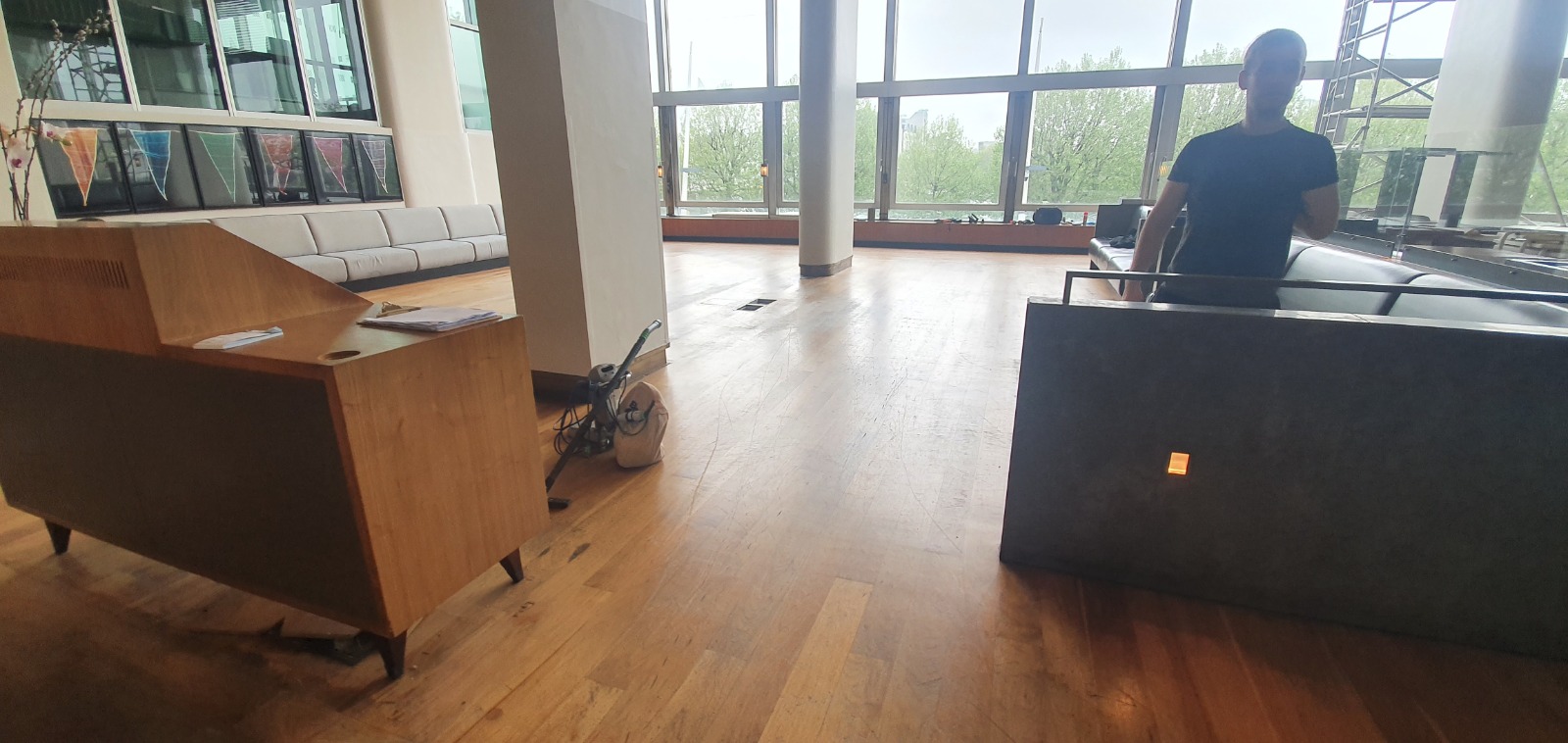
Two reasons sanding gets a bad rap: dust and decibels. Modern kit, used properly, solves both. We use advanced extraction to catch the dust at source and machines that hum rather than howl. No, it won’t be library-quiet—but your people can still think.
Dust discipline that keeps screens (and lungs) happy
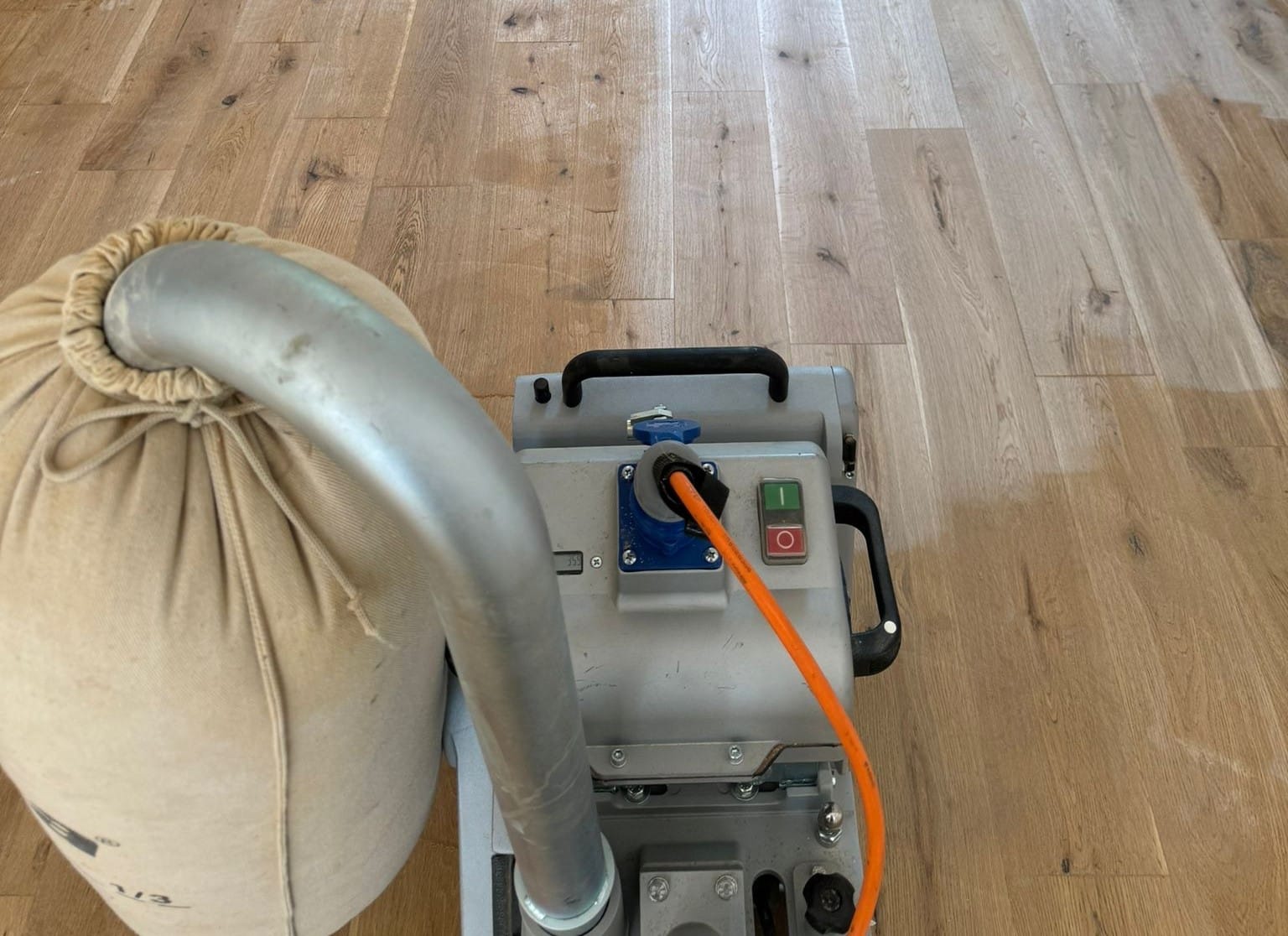
- Source-capture extraction on every sander and edger (see dust-free floor sanding).
- Door seals & temporary barriers around active zones.
- Positive housekeeping: staged vacuuming with HEPA filters; cover sensitive equipment; wipe-down between coats.
- Finish choice matters. Some finishes cure faster and release less odour. Your shortlist: commercial lacquers and hard-wax oils from our floor finishes & seals range.
Noise: reduce, schedule, communicate
- Quiet windows. Block out 10:00–12:00 for the legal team’s calls; we work elsewhere then circle back.
- Low-noise sequencing. Edge-sanding and fine finishing during core hours; heavy sanding after hours.
- Headset diplomacy. Offer noise-cancelling headphones in affected zones. (Cheaper than lost productivity.)
If your building is echo-prone, talk to us about wood floor soundproofing during the works. A small intervention can deliver a big drop in distraction.
Call to action: Cut dust, trim noise, keep sanity. Get a tailored noise/dust plan with your quote—0800 955 0015.
3) Decant smartly: hot-desks, meeting swaps, and “work anywhere” micro-moves
You don’t need to move everyone out; you just need to move cleverly. The aim is to decant the smallest viable group for the shortest time, then put them back into a better space than they left.
Practical decant tactics
- The “snake” approach. Start at one end of a bank of desks and progress like a zipper; staff shift along in small hops rather than camping in the café all day.
- Meeting room swap-overs. While we sand the boardroom, use a breakout room. When we sand the breakout room, move to the boardroom.
- Hot-desking with rules. Reserve a limited set of desks for “decantees” and enforce booking—chaos is the productivity killer, not the sanding.
- Printer & kitchen continuity. Keep one kitchen and one print area live at all times; if a zone must close, signpost the nearest alternative.
For staircases that serve as showpieces (and thoroughfares), plan dedicated windows with stair stripping & sanding and stair & banister restoration—finished safely and reopened quickly.
If your office has a redundant hearth in a breakout space, hearth removal can reclaim square footage while we’re there. One trip, multiple wins.
Call to action: Want a decant plan that doesn’t feel like musical chairs? We’ll design it with you. Sanding Wood Floors — 0800 955 0015.
4) Choose rapid-cure finishes and protective measures that let you reopen zones sooner
This is where the “productivity during works” promise either lives or dies. The right finishes, repairs, and protection mean you can use areas sooner and avoid rework.
Fast, durable finishes for offices
- Commercial lacquers with quick recoat times let us apply multiple coats in a single evening.
- Hard-wax oils can be spot-repaired discreetly, reducing downtime later.
- Paintwork scuffs? Time it so painters and floor techs don’t step on each other’s toes.
Plan for the inevitable quick fixes—scrapes, chips, tired boards—before we start:
- Wood floor scratch repairs for isolated blemishes.
- Wood floor repairs and wood floor renovation & repair for larger issues.
- Floor restoration & gap filling if your boards whistle like a train station.
Gap filling: choose the right method
- Gap filling with resin — fast, tidy, ideal for hairline gaps; great for airflow and dust control.
- Gap filling with strips — stronger for older boards with shifting; superb for long-term stability.
Protection that pays for itself
- Entrance matting to capture grit (grit is sandpaper in fancy dress).
- Chair-safe castors and discreet felt pads in meeting rooms.
- Clear traffic routes while finishes cure: a rope barrier costs less than a recoating session.
Need a different surface revived? We handle hardwood floor sanding, parquet floor sanding and old parquet flooring restoration—including maple wood sanding & finishing if your office leans Scandi.
Call to action: Faster cures, fewer do-overs. Ask us which finish suits your space: 0800 955 0015.

5) Communicate like a campaign (so people know what’s happening, why, and what to do)
The single best productivity tool during Office Floor Sanding? Clarity. People tolerate temporary disruption when they know the plan and see the benefit.
A simple comms cadence
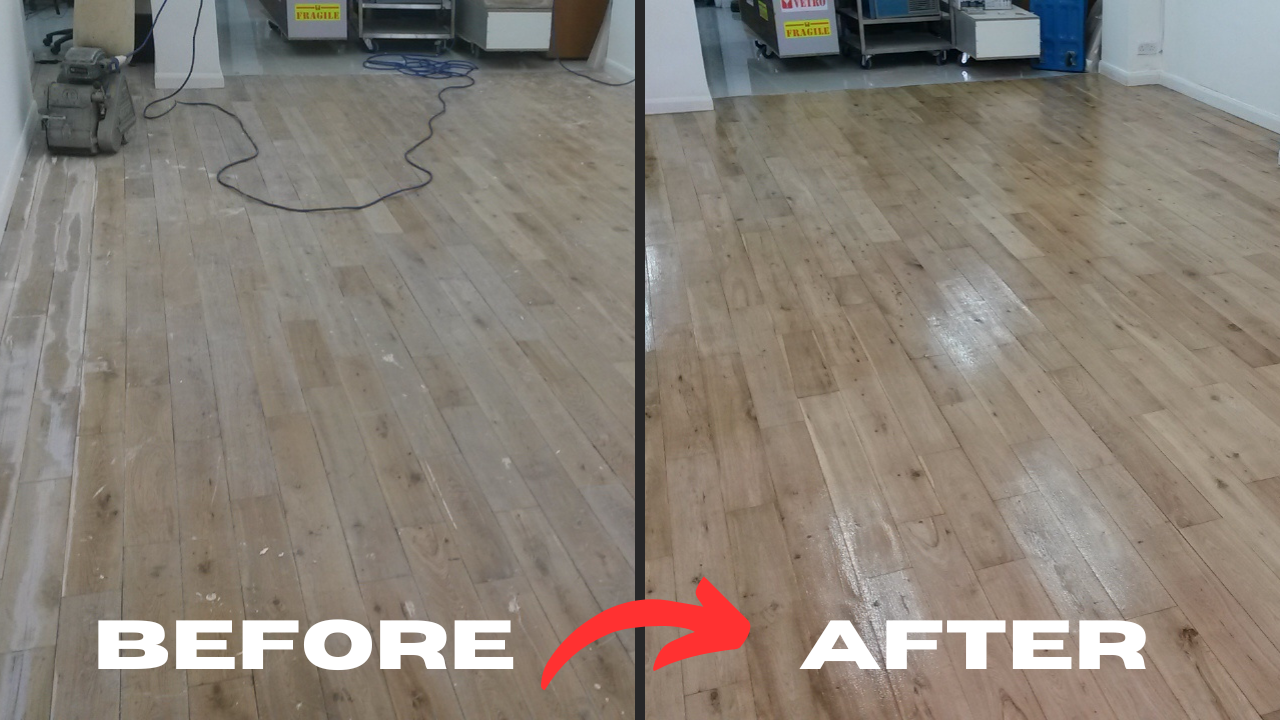
- T-7 days: Send the “why” and “what” note (before/after photos help). Include links to wooden floor sanding & polishing and wood floor sand & seal so staff know this is professional, tidy, and quick.
- T-2 days: Confirm the phase schedule, with maps and alternative routes.
- Morning-of updates: “Today we’re working on Zone B; Boardroom 2 is available; use kitchen on Level 3.”
- End-of-day recap: What’s finished; which areas reopen tomorrow.
Visual signposting
- Floor-standing signs at affected zones with QR links to daily updates.
- Colour-coded maps (red = closed, amber = curing, green = open).
- QR to helpdesk for issues and a rapid response from facilities.
Want to go further? Add a post-project care plan so the floor keeps its showroom glow. It’s the fastest way to compound your ROI—see wood floor maintenance & care.
Call to action: Need templates for staff emails, maps and signage? We’ll share ours. Sanding Wood Floors — 0800 955 0015.
Frequently asked questions (because your team will ask them)
“Can we really work while sanding happens?”
Yes—with the right phasing, dust control, and communication, Office Floor Sanding is compatible with normal operations. We’ve run projects where only a handful of desks moved and client meetings continued unruffled. For proof, ask for case studies when you call 0800 955 0015.
“What about odours and allergies?”
We specify low-VOC, commercial-grade finishes from our floor finishes & seals range; combined with dust-extraction and ventilation, most offices carry on comfortably. Sensitive staff? We schedule their area for out-of-hours work.
“Do we need repairs before sanding?”
Minor fixes can be integrated into the schedule—see wood floor repairs and scratch repairs. Older floors often benefit from renovation & repair or gap filling first; we’ll advise on survey.
“Is parquet more complicated?”
Parquet is a joy when handled by specialists. See parquet floor sanding and old parquet restoration for details. In offices it’s especially durable once finished well.
“What about laminate or mixed surfaces?”
We can advise on laminate flooring installation for areas where you want a different treatment; for timber, sanding is still the gold standard.
“Will it be messy?”
Less than you think. Dust-free floor sanding equipment keeps particulates to a minimum, and we finish each phase with thorough housekeeping before you reclaim the space.
The productivity playbook (cheat sheet for your project lead)
- Pre-project survey: identify repairs, finishes, and special areas (stairs, reception parquet).
- Phasing plan: reflect your real workflow; protect choke points; go out-of-hours where needed.
- Dust/noise plan: extraction at source; low-noise sequencing; comms around quiet windows.
- Decanting: micro-moves, room swaps, protected routes; never shut every kitchen or printer.
- Finishes & protection: rapid-cure systems; gap filling; mats; castors; clear signage.
- Comms: T-7, T-2, day-of, end-of-day; maps with QR; helpdesk channel.
- Aftercare: agree a cleaning routine and maintenance plan to extend life and cut future downtime.
Keep that list on your wall and your project will run like a Swiss train.
What happens on the day (so there are no surprises)
- Arrival & protection. We protect adjacent surfaces, install barriers, check extraction, and confirm the day’s phase.
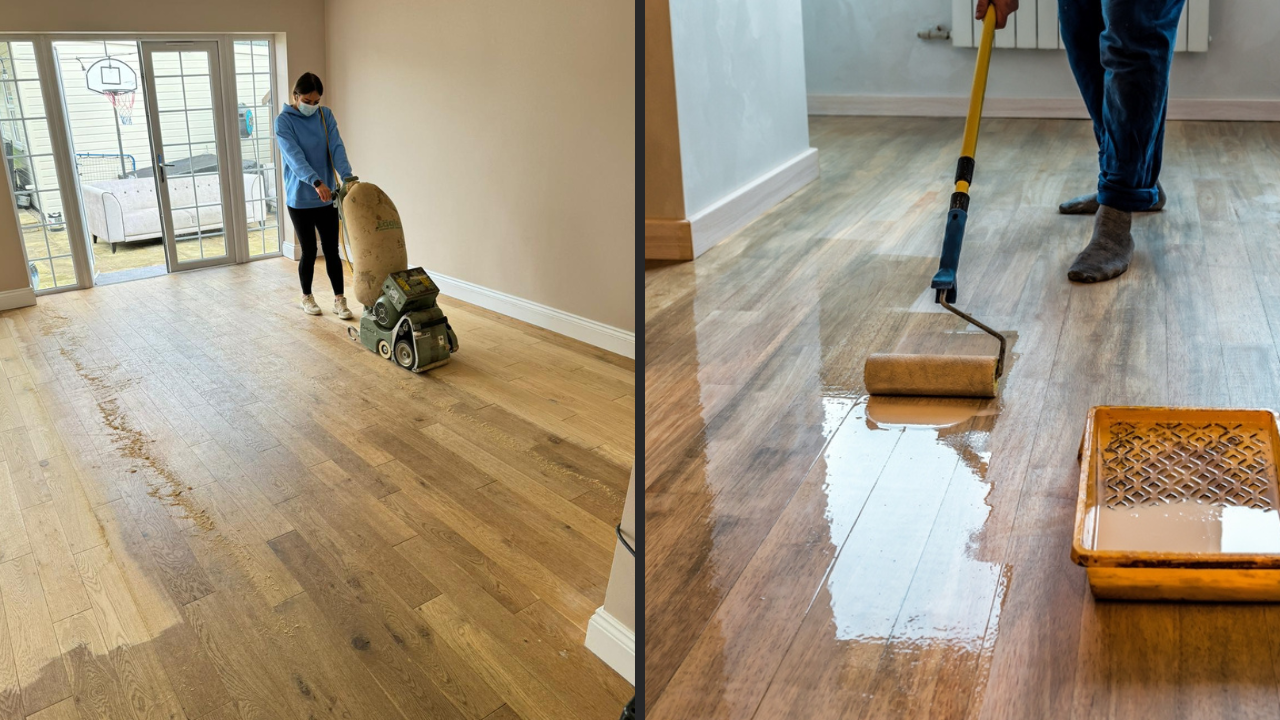
- Sanding sequence. Coarse → medium → fine, edging and corners to match. If necessary, specialist attention for parquet or maple (see maple wood sanding & finishing).
- Repairs & gap filling. We carry out agreed works—resin for fine gaps; strips for wider movement.
- Finishing. Coats applied with cure times that fit your schedule (see varnish treatment and other finishes).
- Handover. We reopen areas as they cure, signpost routes, and brief facilities on care.
- Follow-up. Optional commercial care keeps your floor performing (and avoids future disruption).
If a floor section requires deeper attention—warped boards, sub-floor issues, or legacy hearths—we can integrate floor insulation & sound proofing or hearth removal within the programme, minimising overall downtime.
Related services you may need along the way
- Wood floor sand & seal
- Wooden floor sanding & polishing
- Wood floor soundproofing
- Wooden floor finishing
- Wood floor renovation & repair
- Wood floor scratch repairs
- Wood floor repairs
- Wood floor maintenance & care
- Hardwood floor sanding
- Floor finishes & seals
- Floor insulation fitting & sound proofing
- Dust-free floor sanding
- Parquet floor sanding
- Commercial wood floor care
- Commercial floor sanding
- School floor maintenance
- Maple wood sanding & finishing
- Laminate flooring installation
- Old parquet flooring restoration
- Floor restoration & gap filling
- Stair stripping & sanding
- Stair & banister restoration
- Gap filling with strips
- Gap filling with resin
- Varnish treatment
- Hearth removal
Final word: small disruption, big upgrade
In most offices, the floor is the largest surface your clients ever see—and the one your staff use every minute. Office Floor Sanding is the easiest way to lift the look, reduce cleaning time, and extend lifespan—while keeping everyday work on track. With intelligent phasing, smart decanting, dust-free systems, and rapid-cure finishes, your team won’t just cope—they’ll admire the results.
If you want it done right the first time—by a team that respects your deadlines and your brand—call us now on 0800 955 0015 or visit Sanding Wood Floors.