How Staircase Staining Transforms Tired Stairs into a Feature
You know the funny thing about British homes? We obsess over kitchens and bathrooms, and yet we walk past the same tired staircase ten times a day without really seeing it. Then one day you notice the scuffed treads, yellowed varnish and mismatched tones… and you realise that simple Staircase Staining could make the whole house feel smarter, more modern – and yes, more valuable.
If you’re planning a sale, a remortgage, or just want the place to look like the home you always imagined, your staircase is prime real estate. Done well, Staircase Staining is one of the most cost-effective ways to update your interior, especially when combined with professional wooden floor finishing and wood floor renovation and repair.
In this guide, I’ll walk you through modern colour ideas, practical tips, and the little marketing tricks estate agents quietly love – all based around thoughtful Staircase Staining that works with your floors, walls and lighting, rather than fighting them.
And if you’d rather skip the hard work and have a specialist team handle the sanding, staining and finishing for you, you can always call Sanding Wood Floors on 0800 955 0015 for friendly, expert advice and a free quote.

Why your staircase is the secret weapon of your home
Think of your staircase as a catwalk right through the middle of your property. Buyers and guests can’t avoid it. When it looks fresh, sleek and well cared for, it quietly tells people, “This home is looked after.”
Pair that with beautifully restored floors using services like dust-free floor sanding, wood floor sand & seal and hardwood floor sanding, and you’ve got a story that screams quality – without your spending a fortune on a full renovation.
The difference between paint and stain
Before we dive into colours, let’s be clear about what we’re talking about.
- Paint sits on top of the timber and covers the grain.
- Stain soaks into the wood, enhancing the grain and changing the tone while still letting you see the natural beauty.
Staircase Staining is about working with the character of your timber – oak, pine, maple or old parquet treads – rather than hiding it. When combined with the right floor finishes & seals, it gives a rich, durable finish that feels expensive underfoot.
Why buyers notice a stained staircase
Estate agents may talk about “kerb appeal”, but what really matters is the feeling a buyer gets walking through the front door. A beautifully stained staircase, matched to restored floors and perhaps some subtle floor insulation fitting & sound proofing, gives the impression of a solid, well-built home. It also photographs brilliantly for online listings.
In other words: intelligent Staircase Staining doesn’t just make you smile every morning. It can help you command a better price when you decide to sell.

What is Staircase Staining – and what can it do for you?
Staircase Staining is the process of sanding back your treads, risers and handrails, then applying a carefully chosen stain colour and protective finish. It can:
- Refresh tired, orange or yellow staircases.
- Tie mismatched floors together – for example, darker hall boards and lighter landing.
- Make a narrow hallway feel wider or brighter.
- Add a sense of sophistication that cheap carpets simply can’t match.
Often, Staircase Staining is done alongside stair stripping & sanding, stair banister restoration services and floor restoration and gap filling, so the whole area feels coherent and polished.
The three big questions before you choose a colour
Before you get lost in Pinterest boards and paint charts, ask yourself:
- How much light does the staircase get?
Dark stains need decent natural or artificial light. Otherwise, they can feel gloomy. - What do your existing floors and doors look like?
Your stairs don’t have to match exactly, but they should be cousins, not strangers. If your hallway is being updated with laminate flooring installation or old parquet flooring restoration, consider the whole scheme together. - Who’s using the staircase?
Kids, dogs, high heels and football boots call for tougher finishes, perhaps combined with wood floor scratch repairs and high-performance varnish treatment.

Modern colour ideas that add instant value
Now let’s get into the fun part: colours that make your stairs look current, considered and quietly upmarket.
1. Warm natural oak – the timeless crowd-pleaser
If you want something that will still look good ten years from now, a warm oak stain is hard to beat.
With careful Staircase Staining in this tone, you avoid the orange of 1990s varnish but keep that classic, honeyed warmth that estate agents call “inviting”. It works beautifully with white spindles, grey walls and everything from period terraces to new-build townhouses.
Pair a warm oak staircase with professionally restored floors using wooden floor sanding and polishing and wood floor maintenance and care and you’ll have a look that appeals to the widest possible market.
2. Cool driftwood tones – for calm, Scandi-inspired interiors
Love that airy, Scandinavian feel? Think pale, desaturated timber that looks fresh without feeling cold.
Here, Staircase Staining usually involves sanding right back, lifting out old orange tones and applying a light, grey-beige stain that mimics driftwood. Combine this with soft neutrals, black metal details and simple artwork and your stairs will feel like part of a carefully curated design scheme.
Driftwood tones shine when matched to wider works like parquet floor sanding, maple wood sanding & finishing or even discreet wood floor soundproofing for flats and townhouses.
3. Rich espresso brown – boutique hotel elegance
If your taste runs more “Mayfair hotel lobby” than “Scandi minimalism”, a deep espresso stain is your friend.
Staircase Staining in this palette creates drama and depth. Dark treads paired with crisp white risers and a simple runner can make even a modest hallway feel luxurious. The key is balance: you’ll need good lighting and lighter walls to keep things from feeling oppressive.
This look works brilliantly in period homes where you’ve also invested in commercial floor sanding or commercial wood floor care services for adjoining reception rooms or home offices.
4. Soft greige – the estate agent’s secret weapon
There’s a reason “greige” – that sweet spot between grey and beige – is everywhere. It goes with almost anything.
Using Staircase Staining to hit a soft greige tone on your stairs creates a subtle, modern backdrop that lets your art, lighting and furniture do the talking. It also photographs exceptionally well, which matters when your home hits Rightmove or Zoopla.
Combine greige stairs with elegant floor finishes & seals on adjoining floors, plus perhaps some strategic school floor maintenance style durability if you have busy family traffic.
5. Two-tone heroes – dark treads, light risers
One of the most effective modern looks is a simple two-tone scheme:
- Darker stained treads and handrail
- White or very light risers and spindles
This form of Staircase Staining is wonderfully forgiving – darker treads hide the inevitable wear, while the light risers keep everything bright. It also works well if your floors are a mix of old pine and newer boards, as you can choose a stain that sits somewhere in between.
If you’ve also addressed creaks and gaps with wood floor repairs, gap filling with strips or gap filling with resin, the overall effect is of a staircase that has always been this smart.

Matching your staircase to the rest of your floors
A beautifully stained staircase is only half the story. To really add value, it needs to feel like part of a bigger, thought-through scheme.
Coordinate with hallways and landings
If your hallway boards are being updated with wood floor sand & seal or your landing is having floor restoration and gap filling, choose a stain that either:
- Matches the floor very closely, for a continuous look, or
- Deliberately contrasts while still sharing the same undertone (warm or cool).
Staircase Staining is at its most effective when the eye flows smoothly from one level to the next, without jarring changes in colour or sheen.
Think about adjoining rooms
Open-plan layouts are unforgiving. If your sitting room has newly refinished boards thanks to hardwood floor sanding, and the kitchen has modern planks from laminate flooring installation, your staircase stain needs to sit comfortably between them.
Well-planned staining your staircase can act as a visual “bridge” between different zones, making the whole ground floor feel harmonious.
Don’t forget the details: banisters, spindles and newel posts
Staining your treads but ignoring a battered handrail is like polishing your shoes and leaving the laces frayed.
Most successful staining your staircase projects include careful preparation and finishing of:
- Handrails and newel posts
- Stair stringers
- Thresholds at the top and bottom of the staircase
These are often tied in with stair banister restoration services and, where needed, hearth removal to clean up awkward transitions at the bottom step.

Practical tips for a flawless finish
You’ve chosen your colour. Now let’s talk about how to make it look as good in real life as it does in your head.
Preparation is 80% of the job
A smooth, even surface is essential. That usually means:
- Full stair stripping & sanding to remove old varnish, paint and contaminants.
- Careful edge work to reach corners and nosings, using techniques similar to professional dust-free floor sanding.
- Fixing creaks and movement with wood floor repairs before you even think about stain.
If your staircase is part of a wider project that includes floor insulation fitting & sound proofing or wood floor soundproofing, this is the time to address it.
Test, don’t guess
Different timbers take stain differently. Pine, oak, maple and old parquet can all produce very different results from the same product.
A smart staining your staircase plan always includes test patches on sanded treads, ideally in the same lighting conditions as the finished staircase. Professionals do this as standard, tweaking the mix or application until the colour is just right.
Choose the right protective finish
Once you’ve nailed the colour, you need to protect it. Options include:
- Tough varnishes, often used after larger wooden floor sanding and polishing works.
- Modern seals and oils, similar to those used in floor finishes & seals.
- Specialist commercial-grade products sometimes used in school floor maintenance where heavy traffic is expected.
Good staining your staircase doesn’t just look great on day one; it still looks smart after years of daily use.

Should you DIY or call in the professionals?
You may be thinking, “How hard can it be?” A bit of sanding, a quick stain, job done. In reality, staircase projects are some of the trickiest to get right.
Common DIY pitfalls
Here’s what we see most often when DIY staining your staircase goes wrong:
- Patchy colour where the old finish wasn’t removed evenly.
- Lapping marks where stain has overlapped and dried at different times.
- Drips on risers, spindles and walls.
- Inconsistent sheen from poorly applied varnish or oil.
All of which sends a very different message to buyers than the one you’re aiming for.
The case for a professional team
A specialist team such as Sanding Wood Floors brings:
- Professional sanding equipment for both treads and edges.
- Experience from countless staining your staircase projects across every type of home.
- Access to trade-grade stains, varnishes and seals.
- The ability to coordinate with wider works like wood floor renovation and repair, wood floor sand & seal and parquet floor sanding.
More importantly, they save you from a weekend (or three) of noise, dust and sore knees – and deliver a staircase that genuinely adds perceived value.
If you’d like to talk through options, colours or timings, you can call 0800 955 0015 and speak directly to the team at Sanding Wood Floors.
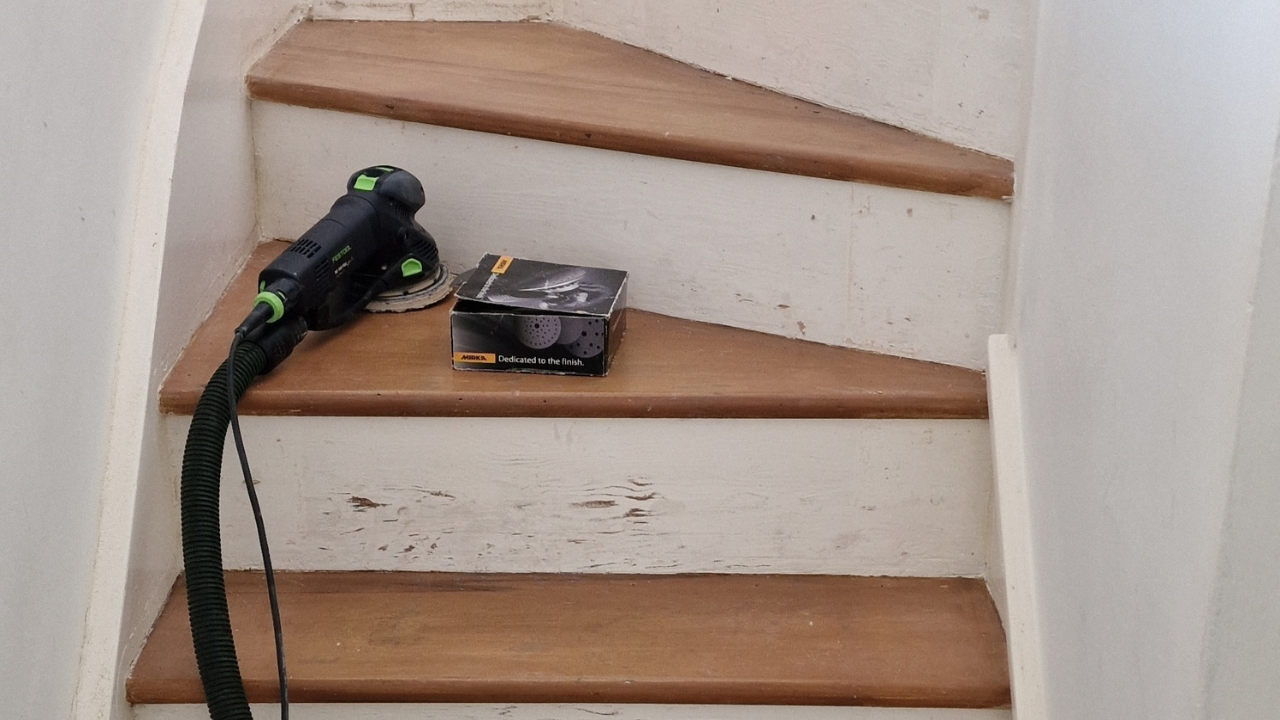
How Staircase Staining adds real-world value
Let’s come back to the point: does all of this actually add value, or is it just about appearances?
Perceived value vs. cost
Compared to a new kitchen or bathroom, the cost of professional Staircase Staining and coordinated floor works is relatively modest. Yet the visual impact when someone walks through the door can be dramatic.
Combine a modern stained staircase with:
- Freshly restored boards via dust-free floor sanding
- Quiet, solid underfoot feel from floor insulation fitting & sound proofing
- Smart transitions thanks to hearth removal and floor restoration and gap filling
…and buyers get that elusive “this feels right” reaction the second they step inside.
Future-proofing your investment
Good Staircase Staining also makes your life easier day to day. A tough, well-sealed staircase:
- Is easier to clean than old carpet.
- Stands up better to pets, children and guests.
- Can be refreshed in future with light wood floor maintenance and care rather than full replacement.
You’re not just making the home look better for a sale; you’re improving how it works for you now.
And here’s a bonus that most people forget: when you refresh your stairs and surrounding floors at the same time, you instantly create a cleaner, more hygienic environment. Old carpets trap dust, pet hair and forgotten spills; properly finished timber can be swept and mopped in minutes. That matters for allergy sufferers, busy families and anyone who simply doesn’t want to spend their weekends scrubbing skirting boards and vacuuming stair treads. A smart upgrade on your stairs makes everyday living lighter, fresher and noticeably easier.

Ready to transform your staircase?
If your staircase is currently:
- Covered in threadbare carpet
- Yellowed with ancient varnish
- A patchwork of different woods and repairs
…then thoughtful Staircase Staining could be the single smartest upgrade you make this year.
Whether you’re dreaming of warm oak, chic greige, deep espresso or a soft driftwood tone, the right combination of professional sanding, staining and finishing will make your stairs feel like part of a considered, modern home – not an afterthought.
Take the next step today
You don’t have to figure it all out alone. Talk to real specialists who do this every day.
- Get honest advice on colours that will suit your home and add value.
- See how Staircase Staining can be combined with wider works like wood floor scratch repairs, wood floor sand & seal and commercial floor sanding.
- Arrange a convenient, dust-controlled project that leaves your home cleaner, smarter and easier to live in.
Call Sanding Wood Floors now on 0800 955 0015 or visit the website to request your free, no-obligation quote.
Give your stairs the attention they deserve, and let Staircase Staining turn that daily climb into a feature you’re proud to show off.